EN
EN
 AR
AR CS
CS DA
DA NL
NL FI
FI FR
FR DE
DE IT
IT NO
NO KO
KO PL
PL PT
PT RO
RO RU
RU ES
ES SV
SV TL
TL ID
ID LV
LV SR
SR SK
SK SL
SL VI
VI SQ
SQ ET
ET TH
TH TR
TR AF
AF MS
MS GA
GA HY
HY KA
KA BS
BS LA
LA MN
MN MY
MY KK
KK UZ
UZ KY
KY
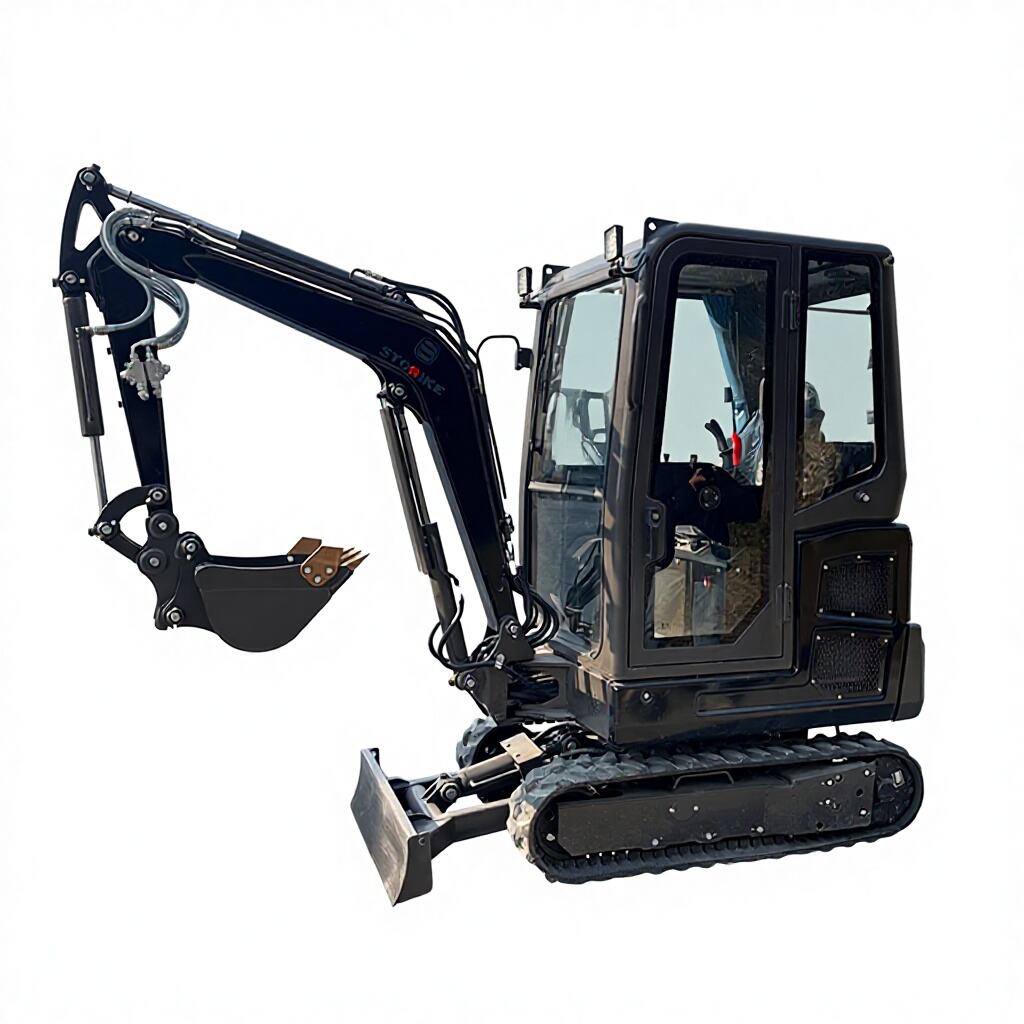
Why Heavy Road Rollers Are Essential for High-Load Infrastructure Compaction
Standard rollers fail under high-load infrastructure demands. Airport runways and interstate highways require deep subbase compaction that lighter units cannot achieve—insufficient mass and low vibration amplitude result in uneven density, accelerating cracking, rutting, and premature degradation. State Departments of Transportation (DoTs) report that 32% of subbase failures originate from under-compaction during initial construction, triggering costly rework cycles.
The Physics of Deep Compaction: How Mass, Vibration Frequency, and Amplitude Enable 98% Proctor Density
Achieving consistent Proctor density hinges on three interdependent physical forces. Mass (16+ tons) delivers downward pressure to overcome soil particle resistance. Vibration frequency (1400–2100 vpm for base layers; up to 3200 vpm for asphalt finishing) reduces air voids by rearranging aggregate particles. Amplitude (1.6–2.1 mm) governs depth penetration—critical for multi-layer infrastructure bases. A validated material study found that rollers combining high mass and optimized amplitude reached 98% Proctor density 24% faster than static alternatives, directly reducing project timelines and long-term maintenance costs.
Types of Heavy Road Rollers and Their Infrastructure-Specific Applications
Vibratory Tandem Drum Rollers (16–22 Ton): Optimal for Asphalt and Granular Base Layers
Vibratory tandem drum rollers in the 16–22 ton range deliver the combined static weight and vibratory force required for dense, stable compaction of asphalt and granular base layers on large infrastructure projects. Dual drums generate uniform pressure across wide swaths—ideal for highways, airport runways, and industrial yards. On hot mix asphalt, adjustable vibration settings prevent surface fracturing while consolidating underlying lifts. For granular bases, fine-tuned amplitude and frequency align with material gradation and moisture content to achieve target density in fewer passes. These machines consistently meet or exceed 98% Proctor density—fulfilling strict DOT and FAA engineering specifications.
Static and Sheepsfoot Variants: When High Ground Pressure or Cohesive Soil Demands Specialized Force
Static rollers rely solely on mass to compress material—making them ideal for final finishing passes on thin overlays, chip seals, or sensitive surfaces where vibration could cause displacement. Their high ground pressure ensures uniform top-layer density without disturbing underlying integrity. Sheepsfoot rollers, by contrast, are purpose-built for cohesive soils like clay or silty clays. Their protruding feet penetrate deeply, kneading soil from below to eliminate trapped air and prevent weak strata that lead to differential settlement. This makes them indispensable for utility trench backfill, embankment construction, and dam foundations. Selecting between static and sheepsfoot variants depends on soil plasticity, moisture content, and required bearing capacity—not just load requirements.
Real-World Heavy Road Roller Performance Across Major Infrastructure Projects
Large-scale infrastructure demands machinery performance backed by measurable outcomes. Heavy road rollers deliver this through project-specific capabilities, as demonstrated in two high-stakes applications:
Highway Success: 32 km I-95 Asphalt Overlay Completed in 11 Days Using Dual-Drum 16-Ton Roller
A 16-ton vibratory tandem roller enabled crews to compact a 32 km asphalt overlay along I-95 in just 11 days—averaging over 3 km per day—while maintaining 96–98% Proctor density throughout. Critically, three-year post-construction monitoring revealed less than 2% variation in rutting depth despite sustained high-volume traffic. This outcome confirms that pairing appropriate machine mass with higher-frequency vibration (2,800–3,200 VPM) enables accelerated schedules without sacrificing structural integrity or long-term performance.
Airport Precision: GPS-Guided Heavy Road Rollers Deliver Real-Time Density Mapping for Runway Pavements
Airport runways demand millimeter-level compaction uniformity to support aircraft loads exceeding 400,000 lbs. GPS-guided heavy rollers equipped with onboard sensors transform compaction into a data-driven process. Installation-grade instrumentation captures:
| Parameter | Measurement Frequency | Use Case Application |
|---|---|---|
| Compaction Energy | 10 times/second | Identifying under-compacted zones |
| Mat Temperature | Continuous | Hot-mix adjustment feedback |
| Roller Pass Mapping | Real-time | Overlap minimization |
Operators view live density heatmaps on onboard monitors, adjust passes dynamically, and auto-generate FAA-compliant compaction reports—cutting manual verification labor by up to 35%.
Selecting the Right Heavy Road Roller: Matching Machine Specifications to Project Requirements
Choosing the wrong heavy road roller risks premature failure, cost overruns, and schedule slippage. Selection starts with defining the project’s structural and geotechnical context: highway, runway, dam, or rail corridor. High-load infrastructure requires machines with minimum mass of 16 tons, as weight directly determines achievable compaction depth and density. For cohesive soils, static or sheepsfoot rollers provide necessary ground pressure; for asphalt or granular bases, vibratory tandem drums with adjustable frequency and amplitude ensure uniform results. Operators must also assess material moisture content, required density standards (e.g., ASTM D1557 or AASHTO T 180), and site constraints—including access, slope, and working width. Short-duration projects often benefit from leasing; long-term fleets may justify purchase. Ultimately, aligning drum width, operating pressure, and control systems with layer thickness and flatness tolerances ensures efficient, repeatable, and specification-compliant compaction.
FAQ
Why are heavy road rollers necessary for high-load infrastructure projects?
Heavy road rollers are essential because they achieve deeper and more consistent compaction, ensuring the stability and durability of high-load infrastructure like highways and airport runways, which lighter units cannot effectively manage.
What factors contribute to achieving 98% Proctor density?
Achieving 98% Proctor density involves balancing mass, vibration frequency, and amplitude. Higher mass improves soil penetration, while optimized vibration settings reduce air voids and align soil particles efficiently.
What types of heavy rollers are most suitable for different projects?
Vibratory tandem drum rollers are ideal for asphalt and granular bases, static rollers work best on chip seals or overlays, and sheepsfoot rollers excel in compacting cohesive soils like clay.
How do GPS-guided rollers enhance accuracy during compaction?
GPS-guided rollers provide real-time data such as compaction energy, mat temperature, and roller pass mapping. These features allow operators to make dynamic adjustments and ensure compliance with density requirements efficiently.
What should I consider when selecting a heavy road roller?
Key factors include the infrastructure type, soil composition, project duration, density standards, machine mass, vibration settings, and site constraints like access or slope.
Table of Contents
- Why Heavy Road Rollers Are Essential for High-Load Infrastructure Compaction
- Types of Heavy Road Rollers and Their Infrastructure-Specific Applications
- Real-World Heavy Road Roller Performance Across Major Infrastructure Projects
- Selecting the Right Heavy Road Roller: Matching Machine Specifications to Project Requirements
-
FAQ
- Why are heavy road rollers necessary for high-load infrastructure projects?
- What factors contribute to achieving 98% Proctor density?
- What types of heavy rollers are most suitable for different projects?
- How do GPS-guided rollers enhance accuracy during compaction?
- What should I consider when selecting a heavy road roller?