EN
EN
 AR
AR CS
CS DA
DA NL
NL FI
FI FR
FR DE
DE IT
IT NO
NO KO
KO PL
PL PT
PT RO
RO RU
RU ES
ES SV
SV TL
TL ID
ID LV
LV SR
SR SK
SK SL
SL VI
VI SQ
SQ ET
ET TH
TH TR
TR AF
AF MS
MS GA
GA HY
HY KA
KA BS
BS LA
LA MN
MN MY
MY KK
KK UZ
UZ KY
KY
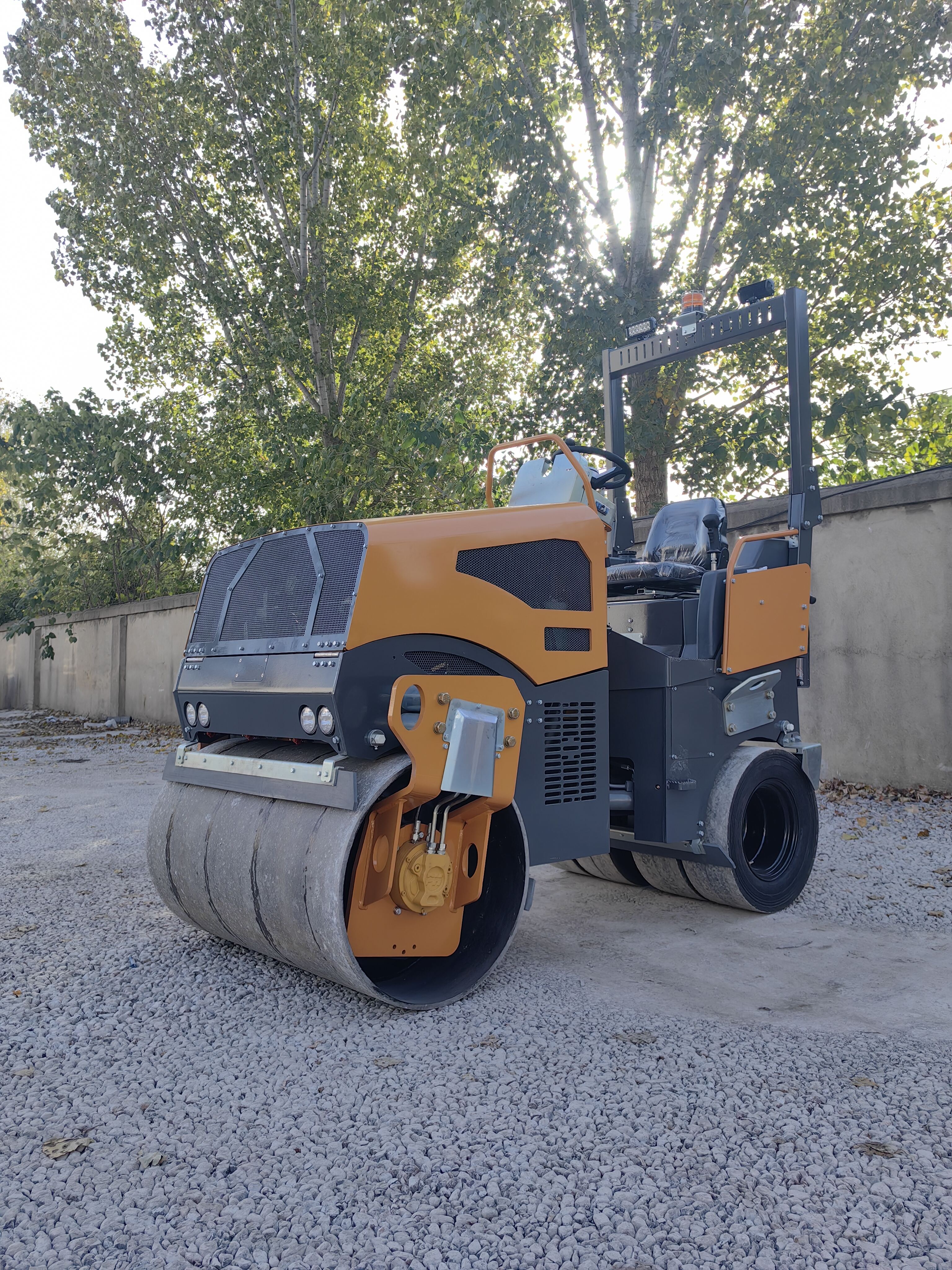
Global Infrastructure Expansion and Rising Demand for Compaction Machinery
Impact of Large-Scale Infrastructure Projects on Compaction Machinery Demand
The push for global infrastructure projects has created a huge need for compaction machines lately, especially with all those massive highway expansions, dam constructions, and smart city developments happening around the world. Take road building specifically - this one category eats up about 28% of what countries spend on infrastructure between now and 2030. Governments everywhere are pouring money into expanding their transport systems to boost economies. We see different priorities across regions too. Places like China, India, and the Gulf States are going all out with brand new highway corridors, whereas in North America most efforts focus on fixing old bridges that need serious work. All these projects require tough compaction equipment for both soil and asphalt layers. The latest market analysis from 2025 shows something interesting too: machine usage has jumped nearly 19% compared to last year because of all this activity. Makes sense when you think about how much actual digging and paving needs to happen.
Role of Government Investments in Roads, Bridges, and Public Utilities
Money from governments continues to drive the adoption of compaction machinery across the globe. More than 60 nations have rolled out massive funding programs worth billions since 2024 to fix up their old infrastructure systems. Take the United States for example where Congress passed a major infrastructure package allocating 110 billion dollars specifically for improving roads. Meanwhile, the European Union launched its Global Gateway project focusing heavily on creating sustainable transportation centers within cities. All this cash is changing how local authorities buy equipment. Municipalities saw a jump of around 34 percent in contracts for state-of-the-art vibratory compactors last year alone. Cities are clearly turning toward better performing machines when it comes to handling public works projects these days.
Market Size and Growth Projections (2024-2030) in the Compaction Machinery Sector
The global compaction machinery market is projected to grow at a 4.9% CAGR, reaching $7.3 billion by 2030. Key drivers include:
- Heavy machinery demand: 5.7% annual growth for asphalt rollers and landfill compactors
- Urbanization pressures: 22% higher sales of mini-plate compactors in dense urban areas
-
Rental market expansion: 40% of contractors now lease equipment for short-term projects
This trajectory aligns with global infrastructure timelines, as 78% of planned projects must be completed before 2030.
Smart Technology Integration in Compaction Machinery
Adoption of AI and Intelligent Compaction Systems in Modern Equipment
AI-powered compaction systems analyze soil density and moisture in real time, automatically adjusting roller frequency and amplitude. A 2023 study in the *International Journal of Construction Robotics* found these systems reduce rework by 32% compared to manual methods. Machine learning enables adaptation to terrain and materials like asphalt or recycled aggregates, while embedded machine vision detects subsurface voids—essential for railway and dam projects requiring 98%+ compaction efficiency.
Smart Compaction Systems: Telematics, GPS, IoT, and Real-Time Monitoring
Modern compactors integrate IoT sensors with centimeter-accurate GPS to generate 3D compaction maps accessible via on-site tablets. This technology replaces error-prone manual checks with precise digital tracking:
| Parameter | Manual Measurement | Smart System |
|---|---|---|
| Soil Temperature | ±5°C accuracy | ±0.3°C |
| Vibration Frequency | Estimated | 50x/sec data |
| Pass Coverage | Visual checks | GPS-mapped |
As noted in industry surveys, 67% of contractors now require telematics for payment verification on federally funded projects, underscoring its role in accountability and quality control.
Integration of Telematics and Real-Time Data for Performance Optimization
Cloud-connected fleets allow project managers to monitor over a dozen efficiency metrics across multiple sites. Real-time alerts notify operators when optimal density thresholds (typically 95-103% Proctor values) are reached, preventing costly over-compaction that can waste $18 per ton in asphalt. Centralized dashboards also incorporate weather forecasts, enabling dynamic scheduling to maintain soil plasticity within 2% of ideal conditions.
Controversy Analysis: Reliability of Fully Automated vs. Operator-Dependent Compaction
While automated systems show 40% fewer density variations in controlled trials (National Asphalt Pavement Association 2023), more than half of field operators express concern about reliability in complex terrains. Hybrid models are gaining traction by combining AI-driven recommendations with manual override capabilities—especially valuable in urban trenches where buried utilities require strict vibration limits within 1.5 meters.
Sustainability and Electrification in Compaction Equipment
Electric and Hybrid Compaction Machines for Reduced Emissions
The switch to electric and hybrid compaction machines is happening fast because companies need to meet those tough emissions goals. According to Global Construction Alliance data from last year, today's electric models cut down on greenhouse gases by around half compared to their diesel counterparts while still getting the job done properly. For sites far away from power grids, hybrid equipment makes sense since it can flip back and forth between different energy sources depending on what works best for saving fuel. Most battery operated vibratory plates these days run anywhere from eight to ten hours straight, which helps construction crews working in cities where there are strict rules about both pollution levels and how loud things can get during work hours.
Innovations in Design to Minimize Environmental Impact
The latest equipment comes with lightweight composite parts and modular builds that cut down on energy needed for moving around and running operations. Lithium-ion batteries are getting better too, lasting about 30% longer than before thanks to those fancy regenerative brakes that grab back some energy when slowing down. There are also sensors built right in that tweak how much vibration happens depending on what kind of soil they're working with, so we don't end up squishing everything too hard or wasting materials unnecessarily. Road builders saw some pretty good results from this stuff according to recent tests showing fuel savings somewhere around 22% for construction projects last year.
Eco-Friendly Compaction Equipment and Regulatory Push for Greener Construction
The tough emissions rules like the EU's Stage V stuff are really making construction companies think about going green. Around fourteen different countries have started giving tax breaks for electric machines these days. And over in India, they actually require that 30 percent of equipment used on government projects must be environmentally friendly by the year 2026. Market experts believe the electric compaction business will see some serious growth over the next few years, probably around 9 percent each year until 2030. This growth seems to be fueled both by improvements in hybrid technology and the fact that carbon costs keep going up. With all these regulations getting stricter every day, what was once just something companies had to do to stay legal is becoming a real competitive edge for those who embrace it early.
Urbanization Driving Demand for Compact and Adaptive Compaction Solutions
Growing Need for Compact and Maneuverable Machines in Confined Urban Spaces
According to the Global Infrastructure Report from 2023, nearly two thirds of all infrastructure work happens in crowded urban spaces these days. This has created a real need for smaller, more nimble compaction machines. The old school equipment just doesn't cut it anymore when working on tight city streets, down in those underground parking levels, or around buildings with historical significance that need careful handling. Equipment makers have caught onto this trend and started producing machines with full circle articulation and zero tail swing features. These innovations let operators get the job done even in spaces as narrow as six feet wide something absolutely essential for keeping workers safe while still getting productive results in these tricky locations.
Adaptive Technologies for Sensitive Urban Soil Conditions
Urban sites pose unique geotechnical challenges, including reclaimed wetlands and unstable fill from former industrial areas. To address this, modern compactors feature:
- AI-driven compaction control that adjusts force distribution based on subsurface readings
- Multi-frequency vibratory systems tuned for mixed-material soils
- Real-time telematics that map stabilization progress to millimeter precision
These technologies help prevent damage to underground utilities while ensuring long-term pavement integrity—particularly important given that 42% of urban pavement failures stem from inadequate soil densification (Urban Construction Journal 2024).
Advantages of Electric and Hybrid Models in Urban Construction Environments
Electric and hybrid compactors cut down on particulate emissions by around 72% compared to their diesel counterparts according to the Clean Air Construction Initiative from 2023. This makes these machines a much better choice for areas where air quality matters most, especially in cities that care about environmental impact. The machines run pretty quietly too, under 65 decibels which means contractors can work late into the night without disturbing people living nearby or causing problems at hospitals. Plus they need less regular maintenance, something that really helps when working on those tight urban construction timelines where every day counts. As money pours into smart city initiatives worldwide, expected to hit nearly 740 billion dollars by 2027, more local governments are starting to require electric machinery in their public contracts. This trend is clearly picking up speed throughout both Europe and North America as well.
FAQ
What is the projected growth rate of the global compaction machinery market?
The global compaction machinery market is expected to grow at a 4.9% CAGR, reaching $7.3 billion by 2030.
How are AI systems being used in compaction machinery?
AI-powered compaction systems analyze soil density and moisture in real time, automatically adjusting roller frequency and amplitude, which reduces rework by 32% compared to manual methods.
Why are electric and hybrid compactors preferred in urban construction?
Electric and hybrid compactors are preferred due to their reduced emissions, quieter operation, and lesser need for regular maintenance, making them ideal for urban areas with strict environmental regulations.
What is the benefit of telematics in compaction machinery?
Telematics in compaction machinery provide real-time data and monitoring, enhancing accountability and quality control, and are required by 67% of contractors for payment verification on federally funded projects.
Table of Contents
- Global Infrastructure Expansion and Rising Demand for Compaction Machinery
-
Smart Technology Integration in Compaction Machinery
- Adoption of AI and Intelligent Compaction Systems in Modern Equipment
- Smart Compaction Systems: Telematics, GPS, IoT, and Real-Time Monitoring
- Integration of Telematics and Real-Time Data for Performance Optimization
- Controversy Analysis: Reliability of Fully Automated vs. Operator-Dependent Compaction
- Sustainability and Electrification in Compaction Equipment
- Urbanization Driving Demand for Compact and Adaptive Compaction Solutions
- FAQ