 EN
EN
 AR
AR CS
CS DA
DA NL
NL FI
FI FR
FR DE
DE IT
IT NO
NO KO
KO PL
PL PT
PT RO
RO RU
RU ES
ES SV
SV TL
TL ID
ID LV
LV SR
SR SK
SK SL
SL VI
VI SQ
SQ ET
ET TH
TH TR
TR AF
AF MS
MS GA
GA HY
HY KA
KA BS
BS LA
LA MN
MN MY
MY KK
KK UZ
UZ KY
KY
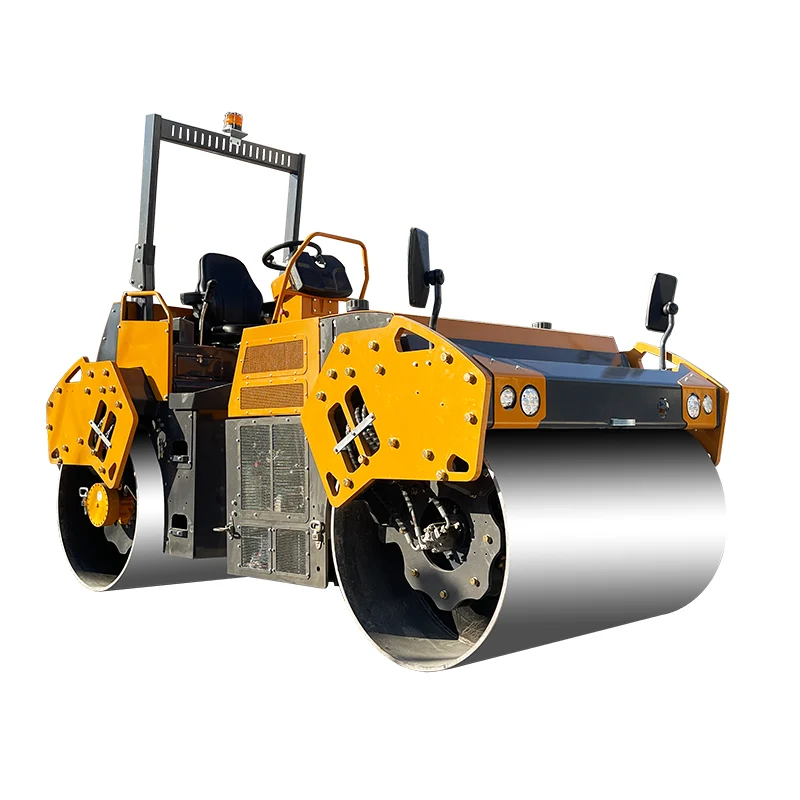
Decoding Roller Dynamics Through Decades of Field Operations
Decades of hands-on job site management across North American highway systems and European municipal corridors reveal how compaction technology has shifted dramatically. When heavy transport trailers unload iron onto a freshly graded job site, veteran site superintendents immediately debate equipment selection: should crews deploy a vibratory tandem roller or stick with a heavy single drum machine? From early days supervising bridge approach stabilization to overseeing multimillion-dollar arterial paving projects, choosing the correct compactor goes far beyond ticking checklist boxes. Equipment selection dictates whether a newly laid asphalt wearing course will endure heavy commercial traffic for decades or develop premature rutting within two seasons. This technical analysis explores how these two heavyweights stack up in real-world applications, merging empirical field experience with core engineering principles to guide strategic fleet investments.
Engineering Mechanics and Deep Soil Penetration Realities
To truly grasp where each machine outperforms the other, marketing brochures must be set aside to analyze dynamic compaction physics. According to foundational geotechnical guidelines published by the Federal Highway Administration (FHWA), deep-layer soil stabilization and subgrade consolidation demand high centrifugal force coupled with deep wave propagation. This precise operational environment is where single drum configurations dominate completely. Armed with a massive front steel drum and high-amplitude eccentric weights, single drum units force air trapped inside cohesive soils, crushed stone bases, and granular sub-grades outward. During a major highway reconstruction assignment in Ontario, field teams initially attempted to use a standard vibratory tandem roller on a deep clay sub-base. The dual drum vibration simply bounced harmlessly off the dense upper crust without densifying the underlying lifts. Swapping it for a single drum compactor immediately resolved stubborn Proctor density test failures, proving that raw soil penetration belongs exclusively to single drum heavyweights.
Mastering Surface Smoothing and Asphalt Paving Perfection
Once structural sub-bases achieve maximum density and binder layers cure, the operational focus shifts toward surface finishing. When asphalt paving is underway, a high-performance vibratory tandem roller becomes the absolute king of the job site. The dual smooth steel drums distribute machine weight evenly across hot mix asphalt layers, eliminating localized depressions and preventing aggregate crushing. Drawing upon technical standards established by the Asphalt Institute, precise frequency tuning ensures optimal air void ratios without fracturing aggregate particles. On a busy urban arterial repaving contract where an operator mistakenly used a converted single drum machine on the final wearing course, the rear drive tires left subtle shear marks that persisted through secondary rolling. Bringing in a dedicated vibratory tandem roller equipped with independent drum vibration and automated water distribution systems ensured a mirror-like finish that easily passed state smoothness profilers.
Balancing Job Site Maneuverability and Workspace Geometry
Modern infrastructure projects rarely offer wide-open, unobstructed layouts; urban utility trenches, tight municipal street corners, and bridge parapets demand exceptional machine agility. A modern vibratory tandem roller thrives in these constrained environments, proving why every paving fleet needs at least one reliable vibratory tandem roller on standby due to its symmetrical design, articulated steering geometry, and superior cab visibility. Operators can comfortably feather drum edges right against existing concrete curbs without gouging pavement or damaging adjacent structures. Conversely, single drum rollers rely on large rear pneumatic tires requiring significantly wider turning radiuses, making them better suited for open earthmoving spreads and expansive highway grading passes. Evaluating operator sightlines, hydraulic responsiveness, and workspace footprints ensures that machine selection directly supports daily linear-foot production targets.
Cost Management, Maintenance Protocols, and Long-Term Value
Investing in professional compaction equipment requires a careful financial calculation balancing initial acquisition costs, ongoing maintenance overhead, and multi-year project versatility. A vibratory tandem roller generally presents lower maintenance requirements for paving-centric operations because both steel drums share identical wear parts, water spray networks, and eccentric bearing assemblies. Meanwhile, a robust single drum compactor provides unmatched structural resilience for heavy earthmoving tasks, reducing the need for multiple specialized grading machines on large civil sites. Field mechanics frequently highlight that standardizing component replacement schedules across matching drum assemblies significantly minimizes operational downtime. Analyzing equipment availability and lifecycle operating costs allows contractors to select the optimal compaction setup to secure maximum profitability across diverse commercial landscapes.
Global Supply Standards and Manufacturing Excellence in Compaction
Navigating equipment acquisition also involves evaluating global manufacturing standards, component reliability, and international supply chain logistics. Modern civil contractors demand heavy machinery backed by rigorous quality certifications, robust spare parts inventories, and transparent factory protocols. Partnering with established industrial manufacturers provides a distinct competitive advantage. STORIKE has built an enduring reputation in the global compaction sector by integrating advanced German hydraulic components, precision-engineered vibratory bearings, and stringent factory-level quality control procedures. Whether an overseas enterprise requires a reliable vibratory tandem roller for municipal street repairs or a heavy-duty single drum compactor for large-scale subgrade stabilization, working with an experienced manufacturer ensures reliable global logistics, CE-certified durability, and comprehensive technical support that keeps heavy equipment operations running profitably worldwide.
Table of Contents
- Decoding Roller Dynamics Through Decades of Field Operations
- Engineering Mechanics and Deep Soil Penetration Realities
- Mastering Surface Smoothing and Asphalt Paving Perfection
- Balancing Job Site Maneuverability and Workspace Geometry
- Cost Management, Maintenance Protocols, and Long-Term Value
- Global Supply Standards and Manufacturing Excellence in Compaction
