 EN
EN
 AR
AR CS
CS DA
DA NL
NL FI
FI FR
FR DE
DE IT
IT NO
NO KO
KO PL
PL PT
PT RO
RO RU
RU ES
ES SV
SV TL
TL ID
ID LV
LV SR
SR SK
SK SL
SL VI
VI SQ
SQ ET
ET TH
TH TR
TR AF
AF MS
MS GA
GA HY
HY KA
KA BS
BS LA
LA MN
MN MY
MY KK
KK UZ
UZ KY
KY
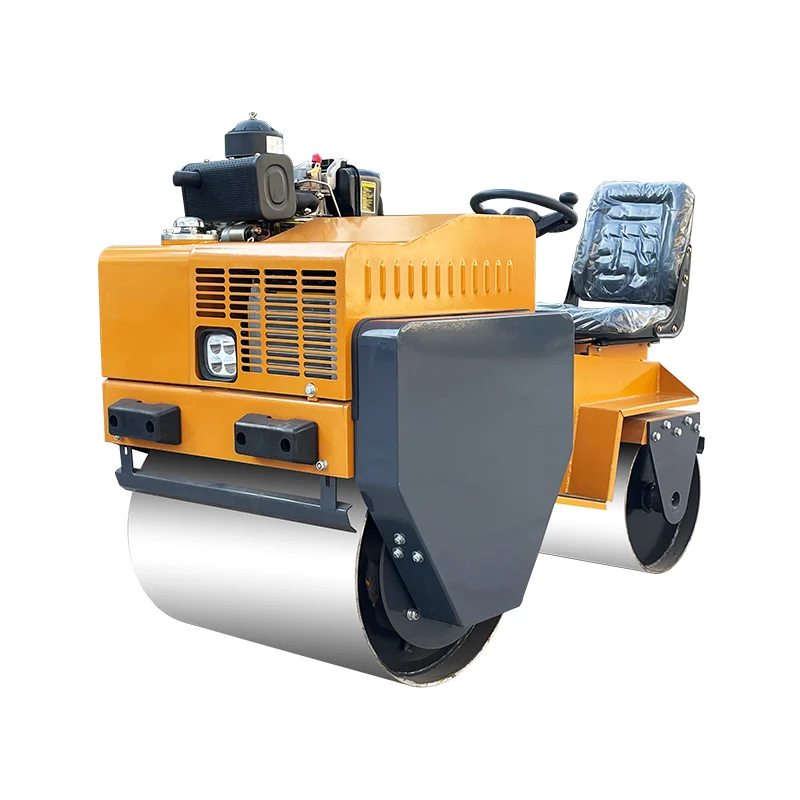
How Vibratory Roller Mechanics Drive Compaction Performance
Vibration frequency and amplitude: Their distinct roles in soil densification and asphalt mat integrity
Vibration frequency—measured in vibrations per minute (vpm)—controls how many impacts the drum delivers per unit time. High frequencies (2,500–3,000 vpm) are ideal for asphalt finishing: they smooth the mat while minimizing surface tearing. Lower frequencies (1,500–2,000 vpm) enable deeper energy penetration into granular soils. Amplitude—the vertical travel distance of the drum—determines impact force. Larger amplitudes generate stronger blows that rearrange particles at depth, making them essential for thick soil lifts. In contrast, asphalt requires low amplitude (0.4–0.8 mm) to avoid crushing aggregate and causing segregation. The resulting dynamic force is governed by the eccentric moment of the rotating weight and its rotational speed, as noted by the Transportation Research Board (TRB, 2000). Thus, frequency dictates impact rate, while amplitude governs peak force. Operators must pair high frequency with low amplitude for final asphalt passes—and low frequency with high amplitude for initial soil breakdown—to reach target density without over-compaction or structural damage.
Centrifugal force fundamentals: Linking drum mass, eccentric weight, and rotational speed to effective compaction depth
Centrifugal force powers vibratory compaction, generated by an eccentric weight spinning inside the drum. Its magnitude follows $ F = m \cdot e \cdot \omega^2 $, where $ m $ is the eccentric mass, $ e $ the eccentricity (radius), and $ \omega $ the angular speed. Because rotational speed appears squared, even modest increases significantly amplify dynamic force. The eccentric moment ($ m \cdot e $) sets amplitude; rotational speed sets frequency—both define total dynamic output. Combined with the drum’s static weight, this force determines how deeply energy penetrates the lift. A heavier drum with moderate eccentric moment achieves deep compaction efficiently, whereas excessive amplitude risks surface fluidization and instability. As TRB (2000) confirms, dynamic force scales directly with eccentric moment and rotational speed—so adjusting either changes compactability. To achieve particle rearrangement and densification, the combined static and dynamic force must overcome the material’s shear resistance. Selecting a roller with appropriate drum mass, eccentric weight, and speed range is therefore critical to match lift thickness and soil type.
Selecting the Optimal Vibratory Roller Type by Material and Project Phase
Single-drum, double-drum, and pneumatic-tired vibratory rollers—matching configuration to layer type and density target
Single-drum vibratory rollers offer versatility: padfoot shells excel in cohesive soils (clay, silt), breaking down clods and stabilizing subgrades; smooth drums suit granular materials like gravel and crushed stone, delivering high base density. Double-drum vibratory rollers—with synchronized vibration and oscillation—are the standard for asphalt paving, consistently achieving >92% of theoretical maximum density. Though not vibratory, pneumatic-tired rollers complement asphalt work by kneading the surface to seal capillaries and increase surface density. Vibratory rollers improve compaction efficiency by up to 30% versus static alternatives—making them vital for schedule-sensitive projects. The table below matches roller type to application:
| Roller Type | Ideal Material | Density Target |
|---|---|---|
| Single-drum (padfoot) | Cohesive soils (clay, silt) | High deep-lift density, soil stabilization |
| Single-drum (smooth) | Granular soils, gravel, crushed stone | High base density |
| Double-drum (vibratory) | Asphalt mixes, granular bases | Uniform mat density, smoothness |
| Pneumatic-tired | Asphalt finish, chip seal | Surface sealing, high surface density |
Application-specific guidance: From subgrade stabilization and granular fill to asphalt finish rolling
For subgrade stabilization, a padfoot single-drum vibratory roller breaks down clods and achieves ~95% of Standard Proctor density in cohesive soils. In granular fill placement, a smooth single-drum roller delivers high centrifugal force—up to 40 tons—to compact lifts up to 12 inches thick. For asphalt base courses, double-drum vibratory rollers use high amplitude and low frequency to consolidate the aggregate skeleton; intermediate courses benefit from reduced amplitude to prevent aggregate fracture. During finish rolling, a pneumatic-tired roller—or a static pass with a double-drum roller—eliminates micro-voids and ensures a smooth, impermeable surface. Matching roller type to phase optimizes compaction quality and enhances long-term pavement performance.
Critical Non-Weight Selection Factors That Impact Total Cost of Ownership
Drum adjustability, transport footprint, and maneuverability—key differentiators for urban, confined, or remote job sites
Drum adjustability enables precise adaptation to site constraints: variable-width drums reduce overlap on narrow urban lanes, cutting pass count and fuel use. Transport footprint is especially critical for remote or congested sites—a machine that fits on a standard trailer without disassembly avoids costly logistics delays and setup downtime. Articulated steering and crab-walk capability allow tight-turn compaction around manholes, curbs, and structures, reducing rework and accelerating timelines. Quick-change drum shells and adjustable oscillation further extend utility across soil and asphalt applications, eliminating the need for multiple dedicated machines on one project.
Service network coverage, parts availability, and attachment compatibility as TCO levers beyond initial purchase price
A responsive local service network minimizes mean time to repair, keeping crews productive. Partnering with dealers who stock wear-critical components—drum scrapers, vibration isolators, hydraulic filters—prevents extended idle time. A single failed hydraulic hose can stall an entire paving train, triggering penalty clauses that quickly erase any upfront equipment savings. Attachment compatibility—including padfoot shells and dozer blades—lets one base platform perform multiple roles, lowering capital investment. Evaluating manufacturer support—parts distribution breadth, service response SLAs, and field technician certification—is thus a core element of total cost of ownership analysis.
Validating Vibratory Roller Performance with Real-World Standards and Field Data
Validating compaction performance requires more than relying on factory settings—it demands verification against field-measured outcomes and recognized standards. Regulatory frameworks set practical boundaries: AASHTO specifies acceptable vibration levels of 2.0–4.0 mm/s for highway projects; ISO 2631 applies to residential areas; FAA guidelines govern airport pavements. Yet these limits alone don’t confirm density achievement. Field research reveals that a roller’s dynamic response—specifically drum acceleration and real-time frequency shifts—correlates strongly with underlying material stiffness (Mooney & Rinehart, 2007). Under favorable conditions, this roller-measured stiffness can reflect compaction quality to depths approaching 1 m (Rinehart & Mooney, 2009), enabling layer-by-layer assessment. Modern intelligent compaction systems integrate GPS and onboard accelerometers to convert those signals into actionable maps—flagging under-compacted zones instantly. When paired with spot verification methods like nuclear density gauges and pre-/post-paving deflection testing, this multi-source data stream confirms whether theoretical roller capacity translates into consistent, durable field results—reducing rework and safeguarding pavement longevity.
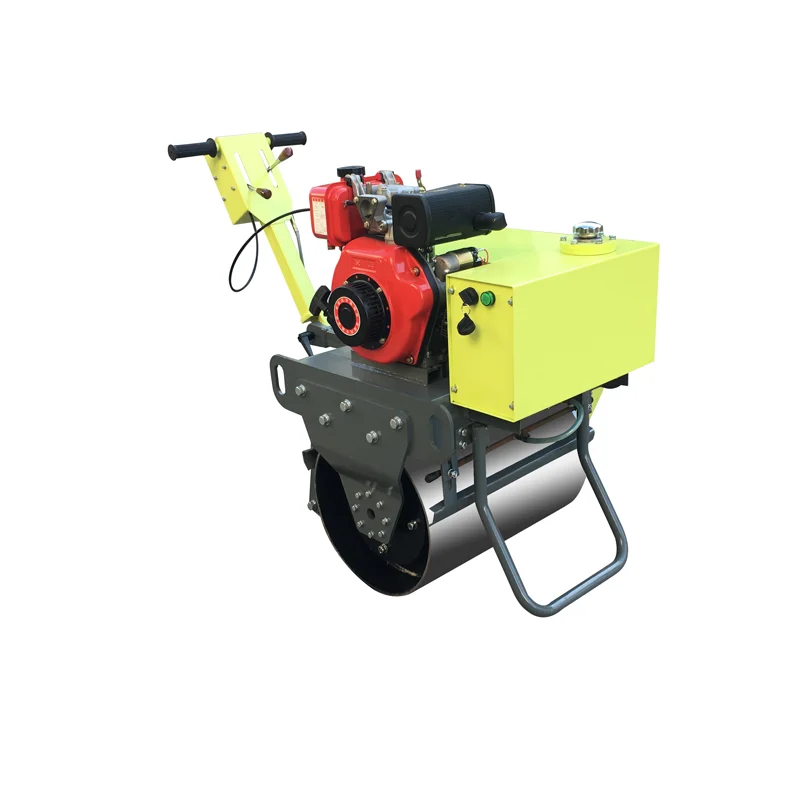
Frequently Asked Questions (FAQ)
What factors influence vibratory roller compaction performance?
Compaction performance is influenced by vibration frequency, amplitude, centrifugal force, drum mass, eccentric weight, and rotational speed. Pairing these factors appropriately to soil type and material thickness optimizes results.
Can vibratory rollers be used for all surface types?
Yes, vibratory rollers can be adapted to various surface types using different drum configurations: padfoot for cohesive soils, smooth for granular soils, and double-drum rollers for asphalt.
Why is amplitude important in vibratory rollers?
Amplitude determines the vertical travel of the drum and the impact force exerted on the material. High amplitude is required for compacting deep soil layers, while low amplitude is critical for asphalt layers to prevent aggregate crushing.
What is the significance of centrifugal force?
Centrifugal force generates dynamic compaction and is crucial for deep energy penetration. It is influenced by drum mass, eccentric weight, and rotational speed.
What should I consider when selecting a vibratory roller?
Key considerations include drum configuration, transportability, maneuverability, amplitude & frequency adjustment, and compatibility with site-specific soil or asphalt types.
Table of Contents
- How Vibratory Roller Mechanics Drive Compaction Performance
- Selecting the Optimal Vibratory Roller Type by Material and Project Phase
- Critical Non-Weight Selection Factors That Impact Total Cost of Ownership
- Validating Vibratory Roller Performance with Real-World Standards and Field Data
- Frequently Asked Questions (FAQ)
