 EN
EN
 AR
AR CS
CS DA
DA NL
NL FI
FI FR
FR DE
DE IT
IT NO
NO KO
KO PL
PL PT
PT RO
RO RU
RU ES
ES SV
SV TL
TL ID
ID LV
LV SR
SR SK
SK SL
SL VI
VI SQ
SQ ET
ET TH
TH TR
TR AF
AF MS
MS GA
GA HY
HY KA
KA BS
BS LA
LA MN
MN MY
MY KK
KK UZ
UZ KY
KY
A Costly Mistake in the Field
A highway contractor in the Southwest learned a tough lesson about roller selection. His crew was compacting a clay-rich subgrade for a new road section. They brought in a double drum vibratory roller because it was available and it looked impressive. The machine made pass after pass, but the density readings stayed stubbornly low. The clay was sticking to the smooth drums, and the vibration was actually working against them, reworking the surface instead of compacting it. The project fell behind. A site visit from a more experienced engineer revealed the problem: they needed a single drum roller with a padfoot drum to knead and compact the cohesive soil. The correct machine arrived, and the subgrade passed density tests within a day. The lesson was expensive but clear: choosing the right drum road roller for the material is as critical as choosing the right machine for the job.
The Single Drum Roller: Built for Soils and Subgrades
The single drum roller is designed to tackle the toughest compaction jobs. It features a large, heavy steel drum at the front and a set of durable pneumatic tires at the rear. This design provides the traction and flotation needed to work on uneven, soft ground while delivering deep compaction force through the drum. These machines are the undisputed workhorses of soil and gravel compaction. They are the standard choice for highway subgrades, building foundations, and large-scale earthworks . For cohesive soils like clay, the drum can be fitted with a padfoot shell—a drum covered in protruding "feet" that knead and mix the soil as they roll, achieving density that a smooth drum cannot. Their operating weight can range from 10 tons to over 25 tons, providing the static weight and dynamic force required for deep lifts.
The Double Drum Roller: The Asphalt Finisher
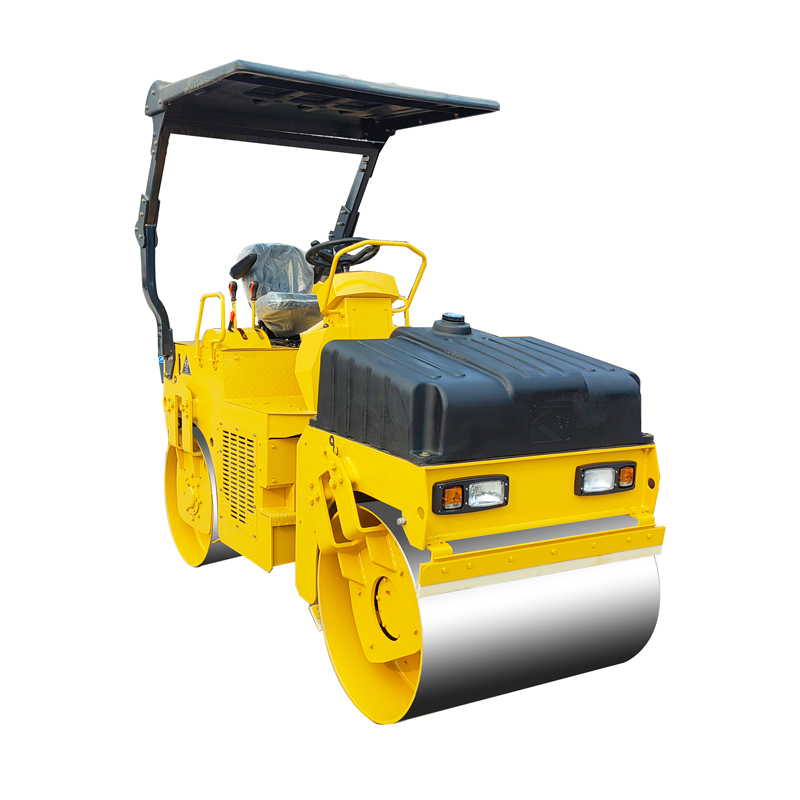
The double drum roller, also called a tandem roller, features smooth steel drums at both the front and rear. This configuration is purpose-built for asphalt compaction. Both drums vibrate, providing efficient compaction on every pass. The vibration frequency and amplitude are adjustable, allowing the operator to fine-tune the machine for the specific asphalt mix and layer thickness . The double drum roller is the industry standard for finishing asphalt surfaces, where a smooth, even, and mark-free mat is required. Its design also allows for tight turning radii and working close to curbs and other obstacles, which is essential for urban street paving and parking lot construction. With both drums providing compaction, the rolling pattern is faster and requires fewer passes, which is critical because asphalt must be compacted while it is still hot .
Matching the Roller to the Material
The golden rule of roller selection is to match the machine to the material. Granular, non-cohesive materials like sand, gravel, and crushed stone respond best to vibratory compaction. A single drum vibratory roller is the go-to machine for these materials, as the vibration efficiently rearranges the particles into a dense, stable mass . For cohesive soils like clay, a padfoot attachment on a single drum roller is often the only way to achieve required density, as the feet penetrate and knead the material, breaking up clods and allowing for uniform compaction . For asphalt, the double drum smooth roller is the undisputed champion. The smooth drums roll the mat without marking, and the dual vibration system provides the necessary compaction force quickly, which is crucial before the material cools and loses its workability.
Key Considerations: Size, Weight, and Maneuverability
Size and weight are critical factors in roller performance. Within each type, there is a wide range. A compact 3-ton double drum roller is perfect for small parking lots, bike paths, and trench work, offering tight turning radiuses and drum offset capabilities that allow it to work close to obstacles . In contrast, a 10-ton or larger double drum roller is a highway-class machine, designed to cover large areas quickly with its wide drums. The same principle applies to single drum rollers: heavier machines with wider drums are more productive on large-scale earthworks, while smaller, more nimble models are better suited for landscaping and site preparation. The weight of the machine and its static linear load (the force exerted per unit length of drum) directly affect the depth and effectiveness of compaction.
The Engineering and Support Behind the Machine
The performance of any vibratory drum roller is rooted in the engineering of its vibration system and the durability of its components. The eccentric shaft inside the drum creates the dynamic compaction force. The ability to adjust frequency and amplitude is essential for adapting to different materials and conditions. STORIKE, a manufacturer with nearly 15 years of experience in the compaction industry, engineers its machines to meet these demands. Their single and double drum vibratory rollers are built with robust frames, reliable engines, and advanced hydraulic systems, reflecting a deep understanding of the requirements of road construction and civil engineering. By focusing on smart manufacturing and quality control, STORIKE produces equipment that contractors can rely on for consistent, long-lasting performance across a wide range of compaction applications. For fleet managers and contractors, choosing a manufacturer with proven engineering capability and a commitment to quality is the key to ensuring that the equipment investment delivers lasting value, job after job.
