 EN
 AR
 CS
 DA
 NL
 FI
 FR
 DE
 IT
 NO
 KO
 PL
 PT
 RO
 RU
 ES
 SV
 TL
 ID
 LV
 SR
 SK
 SL
 VI
 SQ
 ET
 TH
 TR
 AF
 MS
 GA
 HY
 KA
 BS
 LA
 MN
 MY
 KK
 UZ
 KY

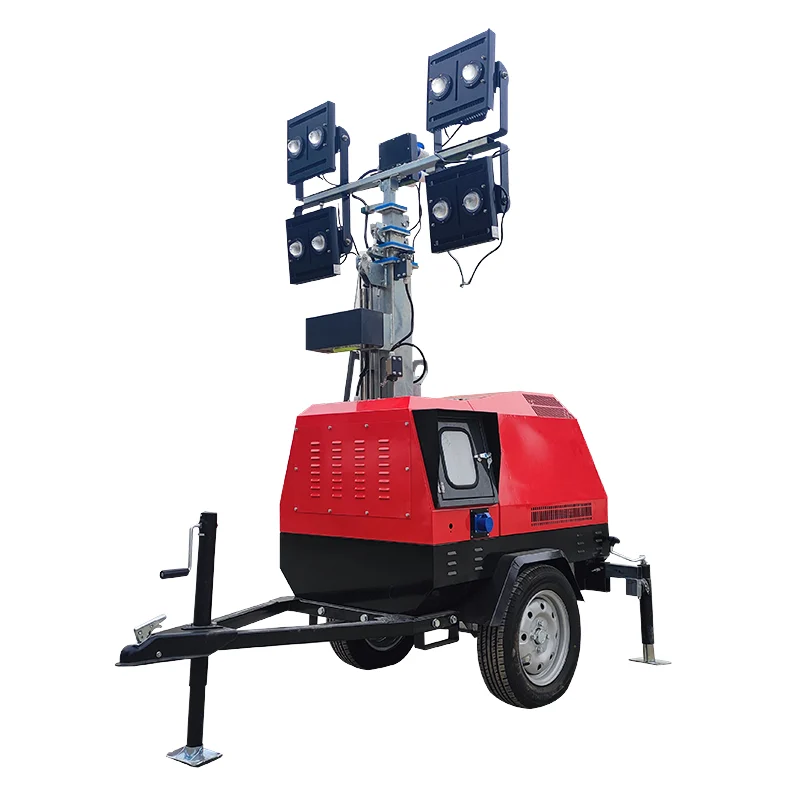
How Solar Lighting Towers Reduce Total Operational Costs
Eliminating Fuel Expenses and Minimizing Maintenance Burden
Solar lighting towers eliminate recurring fuel costs that burden diesel-powered units. A conventional diesel light tower can burn several gallons per night—pushing monthly fuel expenses above $1,000 on active sites. By harnessing free solar energy, these towers reduce that line item to zero: no refueling trips, no on-site fuel storage, and no exposure to volatile fuel pricing.
Maintenance drops even more dramatically. Diesel engines require regular oil changes, air and fuel filter replacements, belt inspections, and cooling-system servicing; alternators and exhaust components add further points of failure. Solar towers replace this mechanical complexity with solid-state LED arrays and sealed lithium battery packs. Routine care typically involves only an annual panel cleaning and periodic battery-health verification. Field data from construction firms shows sites switching to solar cut lighting-related maintenance labor hours by over 70%. Fewer technician visits, reduced spare-parts inventory, and elimination of engine overhauls transform lighting from a persistent cost center into a nearly hands-off asset—delivering a direct, permanent reduction in total operational expenses.
Fast ROI: Achieving Payback in Under 18 Months
The higher initial investment in solar lighting towers recovers swiftly once fuel and maintenance costs vanish. Analysis of mid-sized construction projects shows the monthly fuel avoidance alone often repays the solar premium in 12 to 18 months. For example, a site operating four diesel towers may spend over $4,000 monthly on fuel; switching to solar eliminates that expense entirely. Adding avoided costs for oil, filters, belts, and service labor accelerates payback—frequently under one year on projects with extended shifts or multi-year timelines.
After break-even, the tower operates at near-zero incremental cost, delivering predictable, stable expenses that diesel cannot match. Contractors report this financial predictability strengthens bid competitiveness by lowering total lifecycle cost assumptions, while eliminating fuel logistics improves site safety and scheduling reliability. In essence, solar lighting towers convert a capital outlay into a strategic operational advantage—paying for themselves rapidly and then delivering clean, reliable illumination for the remainder of their 10- to 15-year service life.
Lifecycle Cost Advantage: Solar Lighting Towers vs. Diesel Generators
When evaluating total cost over five years, solar lighting towers consistently outperform diesel alternatives—even with a higher initial price tag. Fuel savings, drastically reduced maintenance, and the elimination of hidden operational liabilities create a compelling financial case.
Upfront Investment Versus 5-Year Total Cost of Ownership
While a conventional diesel light tower may cost 20–30% less upfront, its ongoing fuel demand quickly reverses that advantage. Annual diesel expenses typically range from $1,400 to $2,100 (EnergyWatch 2023), and routine engine servicing adds another $300–$500 per year. In contrast, solar lighting towers—priced between $8,000 and $12,000 to include robust battery storage—incur zero fuel costs and near-negligible maintenance: an annual panel cleaning is often the only required service. The solar unit’s higher initial outlay is fully offset by eliminating fuel procurement, storage infrastructure, and associated handling risks. Over five years, the diesel unit’s total cost of ownership frequently exceeds $16,000, whereas a solar unit remains under $11,000—yielding a net saving of over $5,000, even before accounting for downtime or regulatory penalties.
Hidden Diesel Costs: Logistics, Emissions Compliance, and Unplanned Downtime
Beyond fuel and scheduled maintenance, diesel generators carry significant hidden costs routinely omitted from early budgeting. Fuel logistics—including delivery to remote or constrained sites, secure above-ground storage, spill containment systems, and staff time managing deliveries—can consume an additional 10–15% of annual operating budgets. Equipment downtime from engine failures, cold-start issues, or refueling delays erodes productivity, with unplanned outages often triggering thousands of dollars in idle labor and equipment charges. Tightening emissions regulations add further exposure: idling restrictions, carbon taxes, and non-compliance fines are increasingly common across U.S. states and municipalities. Solar lighting towers eliminate all of these burdens—requiring no fuel supply chain, producing zero on-site emissions, and delivering high uptime even in off-grid environments. The result is predictable, low-risk operational cost control that diesel simply cannot replicate.
Maximizing Financial Incentives and Strategic Value with Solar Lighting Towers
Federal Tax Credits, State Rebates, and Accelerated Depreciation for Solar Lighting Towers
Businesses investing in solar lighting towers can significantly reduce net capital outlay by leveraging layered federal and state incentives. The U.S. Investment Tax Credit (ITC) allows a 30% direct reduction of federal tax liability for qualifying solar installations—effectively slashing the initial cost at tax-filing time. Accelerated depreciation under the Modified Accelerated Cost Recovery System (MACRS) enables full write-off of the asset over five years, further sheltering taxable income. Many states offer additional rebates or performance-based incentives, while specialized low-interest financing programs lower barriers to adoption. Together, these mechanisms compress the effective payback period—often recovering the solar premium within two years, even when conservative assumptions are applied.
Strengthening ESG Reporting and Winning Green Contracts
Solar lighting towers directly reduce Scope 2 emissions by displacing diesel-generated electricity—a quantifiable improvement for ESG reporting frameworks like CDP and GRI. Contractors deploying solar lighting demonstrate tangible progress toward net-zero commitments, strengthening prequalification for public-sector bids and corporate tenders that mandate sustainability disclosures or carbon-reduction targets. In competitive procurement, verified renewable power use has become a decisive differentiator—particularly for infrastructure projects funded by agencies with strict climate mandates. Beyond compliance, zero-emission lighting enhances community relations and stakeholder trust, reinforcing brand leadership in sustainable operations and positioning firms for future green project opportunities.
Proven Scalability: Real-World Adoption Across High-Demand Sectors
Solar lighting towers have moved decisively beyond pilot deployments into mainstream, large-scale operational use. Major construction firms now specify solar-powered units as standard for overnight roadwork and civil infrastructure projects; one leading U.S. infrastructure provider reported a 35% increase in solar tower deployments across state highway projects between 2022 and 2024. The mining sector relies on them for remote exploration camps—eliminating costly diesel resupply flights in regions like Western Australia. Event management companies and disaster-relief agencies deploy them for rapid, emission-free setup in temporary command posts and staging areas. Industry analysts project the global solar lighting tower market will grow at a compound annual growth rate of 8.5% through 2030 (MarketsandMarkets 2023), reflecting a structural shift toward renewable mobile power across construction, mining, emergency response, and public infrastructure—confirming the technology’s proven scalability in mission-critical, high-demand environments.
FAQ
What are the primary advantages of using solar lighting towers?
Solar lighting towers eliminate fuel costs, drastically reduce maintenance, and offer predictable operational expenses compared to diesel-powered alternatives. They also enhance sustainability by producing no on-site emissions.
How long does it take to recover the initial cost of solar lighting towers?
Payback periods range between 12 to 18 months, depending on fuel savings and avoided maintenance costs. Extended projects or high-demand situations may see even faster ROI.
Are there any financial incentives for adopting solar lighting towers?
Yes, businesses can leverage federal tax credits, state rebates, and accelerated depreciation under MACRS, significantly reducing the net capital outlay.
How do solar lighting towers impact ESG reporting?
Solar lighting towers reduce Scope 2 emissions, which can strengthen ESG scores and compliance with sustainability disclosure frameworks, improving green contract opportunities.
Which industries are adopting solar lighting towers?
Construction, mining, event management, and disaster-relief agencies are among the key sectors utilizing solar lighting towers for their scalability, reliability, and emission-free operation.
Table of Contents
- How Solar Lighting Towers Reduce Total Operational Costs
- Lifecycle Cost Advantage: Solar Lighting Towers vs. Diesel Generators
- Maximizing Financial Incentives and Strategic Value with Solar Lighting Towers
- Proven Scalability: Real-World Adoption Across High-Demand Sectors
-
FAQ
- What are the primary advantages of using solar lighting towers?
- How long does it take to recover the initial cost of solar lighting towers?
- Are there any financial incentives for adopting solar lighting towers?
- How do solar lighting towers impact ESG reporting?
- Which industries are adopting solar lighting towers?
