EN
EN
 AR
AR CS
CS DA
DA NL
NL FI
FI FR
FR DE
DE IT
IT NO
NO KO
KO PL
PL PT
PT RO
RO RU
RU ES
ES SV
SV TL
TL ID
ID LV
LV SR
SR SK
SK SL
SL VI
VI SQ
SQ ET
ET TH
TH TR
TR AF
AF MS
MS GA
GA HY
HY KA
KA BS
BS LA
LA MN
MN MY
MY KK
KK UZ
UZ KY
KY
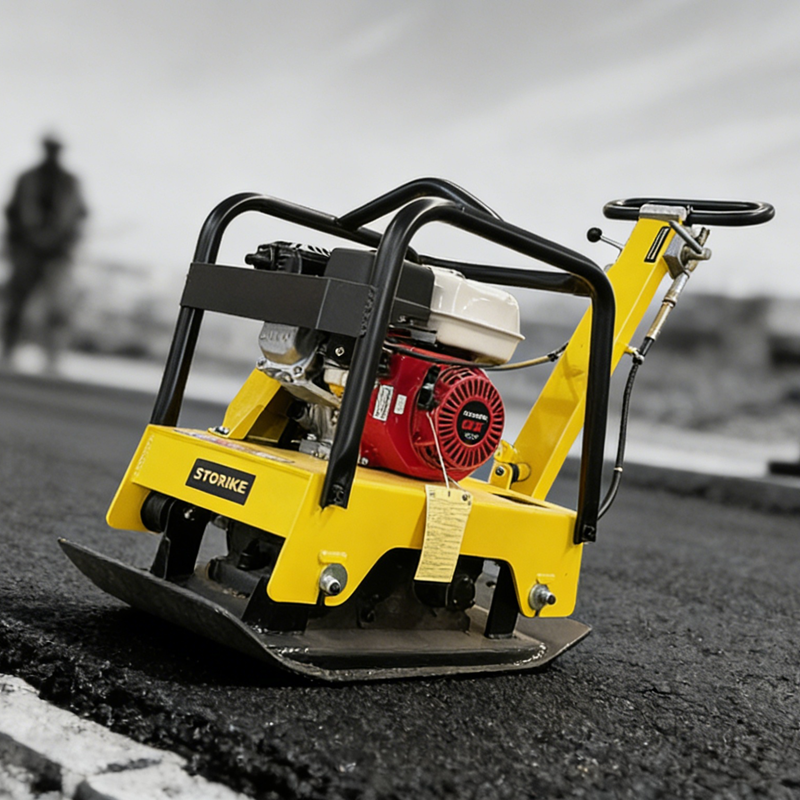
How Road Roller Compactors Transform Infrastructure
Critical Role of Road Roller Compactors in Modern Infrastructure Development
Infrastructure construction relies fundamentally on solid and stable ground foundation treatment, and road roller compactors serve as core essential machinery for all municipal and traffic engineering projects. All types of paved roads, highway surfaces and public traffic facilities maintain stable long-term usability only with scientific and standardized compaction treatment. Seasoned construction professionals with extensive on-site experience confirm that most common pavement defects stem from non-standard foundation rolling during early construction stages. Pavement sinking, irregular cracks and layered structural separation are rarely caused by surface material flaws alone, but mostly result from loose and unevenly compacted base layers that compromise overall structural stability.
Authoritative global civil engineering institutions have verified through long-term project research that compaction quality is a core determinant of infrastructure structural durability. Mass field tracking data indicates that projects implemented with standardized compaction specifications deliver far more stable long-term operating conditions. Road roller compactors optimize the overall quality of foundation engineering by converting loose granular base materials into dense, integrated structural layers, creating reliable preconditions for subsequent pavement construction and long-term stable operation of public infrastructure.
Solid Foundation Compaction Eliminates Hidden Structural Defects
The core value of professional road roller compactors lies in eliminating internal voids within road base materials, a critical process that cannot be fully achieved through manual tamping or small auxiliary construction tools. Loose soil, gravel and aggregate mixtures retain countless tiny gaps after simple laying and leveling. These subtle internal gaps shift and compress gradually under sustained vehicle load and natural temperature and humidity changes, slowly evolving into visible pavement damage that undermines the flatness and safety of traffic facilities.
Modern road roller compactors adopt a dual working mechanism combining static pressure and vibration compression to apply uniform force across construction surfaces. Balanced pressure output ensures consistent density and compactness throughout every section of road base, effectively avoiding uneven soft zones caused by incomplete compaction. Professional civil engineering analysis validates that standardized rolling treatment greatly enhances the overall structural integrity of road foundations, strengthens resistance against external pressure and natural erosion, and minimizes latent structural risks for completed infrastructure projects.
Powerful Material Adaptability Suits Diverse Construction Scenarios
Modern infrastructure engineering involves a wide range of base and surface materials, placing high requirements on the universal compatibility of construction machinery. Reliable road roller compactors maintain stable working performance when applied to ordinary soil, stabilized soil, crushed stone aggregates and hot asphalt mixtures. Different building materials feature unique physical properties, requiring matched compression intensity and vibration frequency to achieve standardized compaction results, and modern roller equipment supports flexible parameter adjustment to fit general construction requirements.
In conventional municipal construction and highway renovation projects, adjustable working parameters enable road roller compactors to adapt to both soft foundation treatment and rigid surface paving processes. This high compatibility unifies construction standards across different engineering stages and avoids inconsistent structural quality caused by frequent equipment replacement. Stable and adaptable mechanical performance makes road roller compactors a widely recognized foundational machine for various infrastructure engineering projects globally.
Optimized Mechanical Design Improves Overall Construction Quality
Continuous mechanical upgrading and structural optimization have greatly improved the comprehensive performance of contemporary road roller compactors. Traditional rolling machinery often suffers from uneven pressure distribution and single working modes, which easily lead to inconsistent compaction effects on local road sections. These minor structural irregularities gradually expand during long-term infrastructure operation and weaken the overall structural stability of paved surfaces.
Upgraded road roller compactors are equipped with balanced drum structures, stable vibration systems and precise pressure control modules. The refined mechanical design ensures even force distribution across the entire rolling surface, forming flat, dense and uniform compacted foundation layers. Optimized shock absorption and rigid frame structures reduce mechanical wear and operational instability during long-duration continuous work, improving overall construction stability on engineering sites. Delicate industrial structural design allows modern compactors to adapt to high-intensity, long-cycle infrastructure construction environments.
Standardized Compaction Reduces Long-Term Infrastructure Maintenance Pressure
Scientific compaction treatment delivered by standard road roller compactors creates sustainable long-term value for public infrastructure assets. Fully compacted road bases possess excellent anti-permeability and anti-deformation properties, capable of resisting rainwater erosion, frost heave and sustained vehicle load pressure. Infrastructure with solid foundation structures maintains stable working conditions for longer periods and reduces the need for frequent partial repairs and renovations throughout its service lifecycle.
Industry statistical data shows that infrastructure constructed with standardized compaction specifications maintains stable structural performance for extended lifespans and lowers repeated resource investment in later upkeep. Consistent foundation stability supports reliable daily operation of municipal roads, highways and supporting public facilities, delivering stable public service capacity for urban traffic and infrastructure development. Such long-term structural advantages make professional road roller compactors an essential component of high-standard modern infrastructure construction.
Advanced Manufacturing Strength Delivers Premium Road Roller Solutions
Stable, high-performance road roller compactors depend on standardized manufacturing systems and rigorous quality control protocols, core strengths embodied fully by Storike. Focused on the research, development and production of engineering machinery, Storike operates standardized production workshops and complete integrated manufacturing lines. All machinery undergoes strict performance calibration and comprehensive testing prior to delivery, ensuring stable and reliable structural performance for global engineering applications.
Equipped with a mature global supply chain and rich engineering machinery manufacturing experience, Storike consistently optimizes equipment structural design and overall mechanical performance to match universal infrastructure construction demands worldwide. By adhering to unified manufacturing specifications and multi-layer quality inspection procedures, Storike supplies robust, high-standard road roller compactors for global engineering partners, delivering reliable mechanical support for all types of high-quality modern infrastructure projects.