 EN
EN
 AR
AR CS
CS DA
DA NL
NL FI
FI FR
FR DE
DE IT
IT NO
NO KO
KO PL
PL PT
PT RO
RO RU
RU ES
ES SV
SV TL
TL ID
ID LV
LV SR
SR SK
SK SL
SL VI
VI SQ
SQ ET
ET TH
TH TR
TR AF
AF MS
MS GA
GA HY
HY KA
KA BS
BS LA
LA MN
MN MY
MY KK
KK UZ
UZ KY
KY
Why Compaction Timing Is the Decisive Factor for Asphalt Roller Effectiveness
The 15-Minute Thermal Window: How Temperature Decay Drives Density Loss
For an asphalt roller to achieve target density, the mix must be compacted within a narrow thermal window—typically just 15 minutes after placement. As the mat cools, binder viscosity increases sharply and aggregate particles begin to lock in place, resisting rearrangement. Compaction effort applied beyond this point yields diminishing returns: a drop of only 15°C can increase in-place air voids by over 1.5%, accelerating moisture infiltration and fatigue cracking. This non-linear relationship means that roller speed, pass count, and positioning must align precisely with the mat’s cooling curve. A roller operating too slowly—or too far behind the paver—misses the effective temperature threshold entirely, permanently locking in high air voids. As confirmed in peer-reviewed research, compaction below the minimum effective temperature is largely ineffective—not because force is absent, but because the material is no longer receptive to it.
Case Evidence: I-66 Reconstruction — How Precision Roller Scheduling Cut Rutting by 22%
The I-66 reconstruction project—a 19 km stretch under heavy truck traffic—demonstrated the impact of timing over brute-force compaction. Initial density testing revealed inconsistency behind the breakdown roller, traced to delayed return passes that allowed surface temperatures to fall below the compaction threshold. The team implemented a GPS-synchronized rolling protocol, linking the drum roller’s position to real-time thermal data from an infrared sensor mounted on the paver. This ensured consistent proximity to the screed and alignment with the mat’s thermal decay profile. The result was a 22% reduction in predicted rutting depth, attributable not to increased roller productivity or additional passes, but to precise temporal coordination with the mix’s evolving workability.
Matching Asphalt Roller Type to Pavement Layer and Lift Characteristics
Three-Stage Roller Sequencing: Breakdown, Intermediate, and Finish Roles Explained
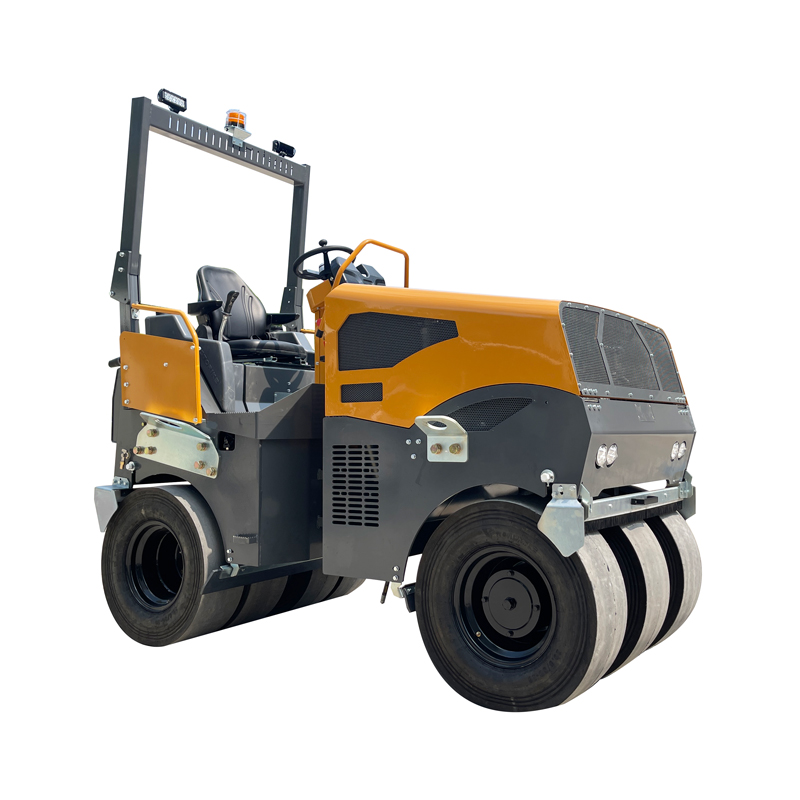
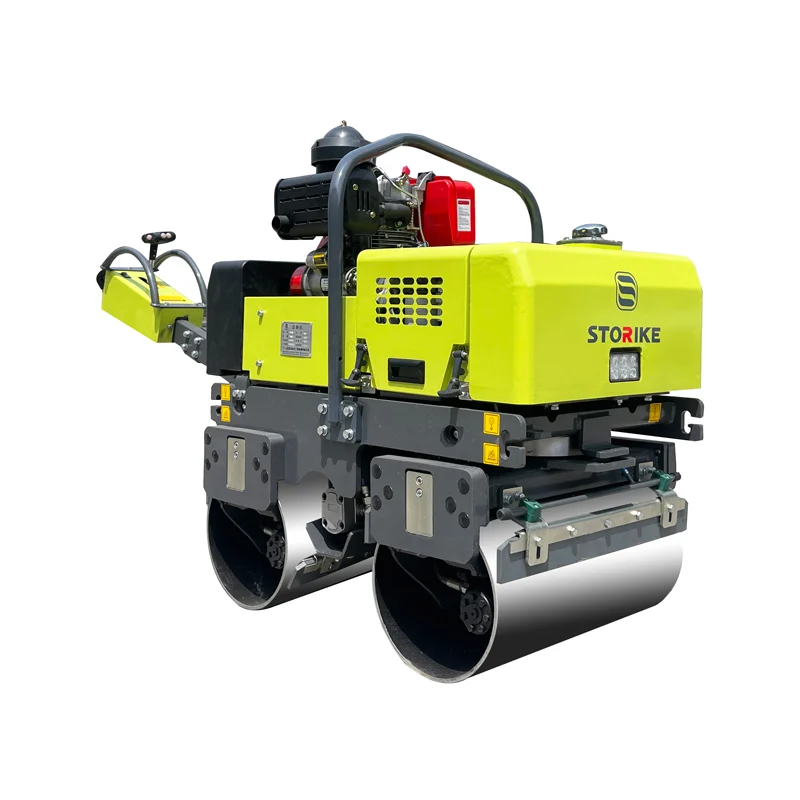
Effective compaction follows a disciplined three-stage sequence—breakdown, intermediate, and finish—each aligned with the mat’s temperature, stiffness, and density goals. The breakdown roller operates immediately behind the paver, delivering the majority of compaction while the mix remains hottest and most malleable. Vibratory double-drum rollers are standard here, using high centrifugal force to penetrate thick lifts and achieve up to 90% of target density—provided they match the paver’s speed to prevent segregation or cooling delays. The intermediate roller follows closely to refine density and seal surface voids; pneumatic-tire rollers excel at this stage, especially with angular aggregates, thanks to their kneading action. Finally, a static steel-wheel finish roller removes surface marks and ensures smoothness—adding minimal density but critical ride quality. Consistent sequencing across these stages reduces air void variability by 1–2%, directly enhancing long-term durability.
When Pneumatic Rollers Excel on Thin Lifts (<25 mm) — A Material-Specific Exception
For thin lifts under 25 mm—common in overlays, bridge decks, and urban resurfacing—pneumatic-tire rollers are not just appropriate but often superior. Their multi-tire configuration applies uniform vertical pressure without the aggressive impact of vibratory drums, compacting from the bottom up and preserving aggregate integrity. This is especially vital for polymer-modified or stone-matrix asphalt (SMA), where coarse aggregate fracture compromises rut resistance and interlock. Field evidence shows pneumatic rollers reduce aggregate crushing risk by 30% compared to vibratory alternatives on thin lifts, while also improving interlayer bonding and reducing permeability. As a result, many state DOT specifications now require pneumatic intermediate rolling for thin-lift applications where performance, longevity, and surface quality are non-negotiable.
Selecting the Right Asphalt Roller Based on Mix Design and Performance Requirements
Polymer-Modified Asphalt: Why Vibration Frequency and Amplitude Must Be Recalibrated
Polymer-modified binders significantly increase mix stiffness, altering its viscoelastic response during compaction. Standard vibration settings—optimized for conventional PG 64-22 or similar—often lead to poor density development, surface tearing, or premature cooling when applied to stiffer mixes. Research from the National Cooperative Highway Research Program (NCHRP 2021) demonstrates that increasing vibration frequency by 10–15% while reducing amplitude by 5–8% improves energy transfer efficiency: higher frequency better matches the material’s resonant response, while lower amplitude prevents surface disruption. Operators must treat each polymer-modified mix as a distinct entity—validating optimal settings on a test strip before production begins.
Intelligent Rollers with Real-Time Density Mapping: From Reactive to Predictive Compaction Control
Traditional compaction relies on post-cooling core sampling—a reactive method offering no opportunity for correction. Intelligent compaction (IC) systems transform this workflow by integrating accelerometers, GPS, and onboard processing to generate continuous, real-time density or stiffness maps. Color-coded pass displays in the cab allow operators to identify and address low-density zones immediately—before the mat cools and sets. On a recent FHWA-monitored interstate project, IC-equipped rollers reduced core-density variability by 38% and brought under-compacted zones below 2%. By shifting from guesswork to guided decision-making, intelligent rollers cut rework, improve consistency, and extend pavement service life—proving that data-informed timing and technique are foundational to modern asphalt performance.
FAQ: Compaction Timing and Asphalt Roller Operations
Why is compaction timing critical?
Compaction timing is critical because asphalt mix remains receptive to compaction only within a narrow thermal window. After this period, the material cools and becomes resistant to reconfiguration, leading to higher air voids and compromised durability.
What is the ideal sequence for roller operations?
The ideal sequence is breakdown rolling immediately behind the paver, intermediate rolling to refine density, and finish rolling for smoothness. Each stage aligns with the mat’s changing temperature and stiffness.
How do intelligent rollers improve compaction?
Intelligent rollers provide real-time density mapping and pass tracking, enabling operators to address density deficiencies while the mat is still workable. This reduces variability and enhances pavement quality.
When should pneumatic rollers be used?
Pneumatic rollers are ideal for thin-lift applications under 25 mm and polymer-modified or stone-matrix asphalt mixes. They offer uniform pressure and minimize aggregate fracturing compared to vibratory rollers.
