EN
EN
 AR
AR CS
CS DA
DA NL
NL FI
FI FR
FR DE
DE IT
IT NO
NO KO
KO PL
PL PT
PT RO
RO RU
RU ES
ES SV
SV TL
TL ID
ID LV
LV SR
SR SK
SK SL
SL VI
VI SQ
SQ ET
ET TH
TH TR
TR AF
AF MS
MS GA
GA HY
HY KA
KA BS
BS LA
LA MN
MN MY
MY KK
KK UZ
UZ KY
KY
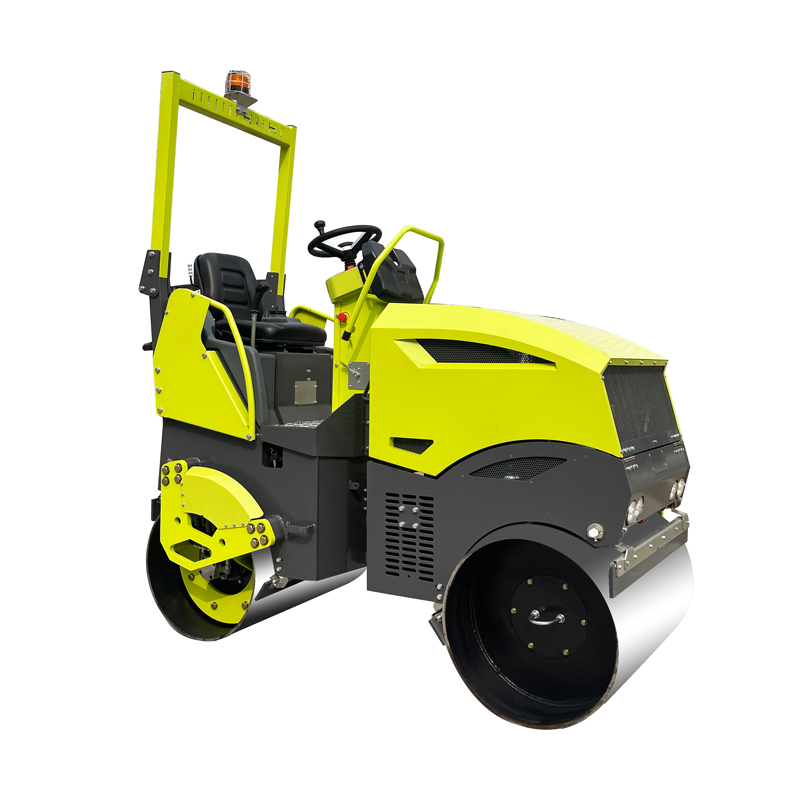
Core Vibratory Parameters: Amplitude, Frequency, and Speed for Tandem Roller Efficiency
How amplitude and frequency directly affect density gain in asphalt vs. granular layers
Amplitude and frequency govern how vibratory energy is transferred into the material—dictating both compaction depth and surface response. For asphalt, high frequency (2,500–4,000 vibrations per minute) paired with low amplitude (0.4–1.0 mm) delivers rapid, shallow energy pulses ideal for thin lifts. This approach consolidates the mat without crushing aggregates or inducing surface tearing, preserving smoothness and structural integrity. Granular layers—including crushed stone and sand-gravel mixes—require the opposite: low frequency (1,500–2,000 VPM) and high amplitude (1.5–2.0 mm). The deeper drum displacement effectively transmits energy through thick lifts (up to 500 mm), promoting particle rearrangement and void closure. Modern tandem rollers support real-time switching between these settings, enabling crews to adapt seamlessly across material transitions on a single job. Misapplication—such as applying high amplitude to thin asphalt—risks aggregate fracture and finish defects; conversely, low amplitude on thick granular layers yields insufficient energy penetration and soft spots. This material-specific calibration is foundational to achieving target density and long-term performance.
Balancing speed and impact spacing to maximize compaction without sacrificing mat finish
Roller speed directly controls impact spacing—the distance between successive drum vibrations—and must be coordinated with frequency to ensure consistent coverage. Moving too fast reduces impacts per unit area, compromising density; moving too slow causes overlapping vibrations that may over-compact, displace material, or tear the surface. For asphalt, the optimal speed range is 3–6 km/h; for granular layers, it narrows to 2–4 km/h due to greater resistance and required energy penetration. Within those ranges, operators should aim for 20–40 impacts per meter—for example, at 3,000 VPM and 4 km/h, impact spacing is approximately 22 mm, delivering effective coverage without displacement. Variable-frequency rollers allow dynamic adjustment to maintain this balance as material stiffness evolves during successive passes. The result is uniform density across width and length, with minimal need for corrective rolling and a finish that meets specification without rework.
Rolling Patterns and Pass Management to Ensure Uniform Density and Surface Quality
Optimizing overlap, sequence, and pass count to prevent over-compaction and segregation
Consistent overlap—15–20 cm between adjacent passes—is essential to eliminate weak zones while avoiding redundant effort. Clear start/end markers and standardized operating procedures help crews maintain precision across shifts. Sequential patterns such as straight-line, staggered V, or double V promote even density distribution and reduce directional bias. Field experience and industry guidelines (e.g., Asphalt Institute MS-22 and ASTM D6931) confirm that 5–7 vibratory passes typically achieve optimal density for standard asphalt lifts—beyond which segregation risk increases and marginal gains diminish. On granular materials, reducing speed to 2–3 km/h improves particle interlock without sacrificing productivity, especially when lift thickness exceeds 300 mm.
Moisture sensitivity and lift thickness: When fewer passes yield better tandem roller results
Moisture content significantly influences compaction behavior: saturated granular bases require up to 40% fewer passes to avoid pore pressure buildup, which can trigger instability or liquefaction. For thicker asphalt lifts (>8 cm), early breakdown passes prioritize density development, while final passes shift focus to surface refinement—often achieved with just 2–3 static (non-vibratory) rolls. Ambient temperature also demands adaptation: below 10°C, shorten individual pass lengths, increase infrared temperature monitoring frequency, and reduce roller speed by ~15% to sustain compaction effectiveness and prevent thermal cracking. These adjustments reflect practical field knowledge—not just theoretical thresholds—and underscore why experienced operators remain indispensable in variable conditions.
Matching Tandem Roller Specifications to Material, Scale, and Site Conditions
Selecting the right tandem roller weight, vibration mode, and drum width for project-specific demands
Selecting the appropriate tandem roller hinges on three interdependent parameters: operating weight, vibration mode, and drum width—all calibrated to material type, lift thickness, and site constraints. Light-duty rollers (<3 tons) excel on sidewalks, bike paths, and patch repairs, where maneuverability outweighs mass-driven compaction. Medium-weight units (3–8 tons) offer versatility for urban roads and parking lots, balancing productivity with control. Heavy-duty rollers (>10 tons) are specified for highway projects, consistently achieving ≥95% relative density across wide asphalt sections per AASHTO T193 and state DOT standards. Vibration mode must align with lift depth: low amplitude (0.3–0.5 mm) prevents over-compaction in thin lifts (<40 mm), while high amplitude (0.8–1.0 mm) provides necessary energy for base layers up to 200 mm. Drum width further refines application—narrow drums (1.0–1.4 m) suit confined spaces and fine grading; wider drums (1.5–2.1 m) accelerate coverage on large-area paving. Thoughtful alignment of these specifications ensures uniform density, minimizes mat cracking, and fully leverages the roller’s design intent.
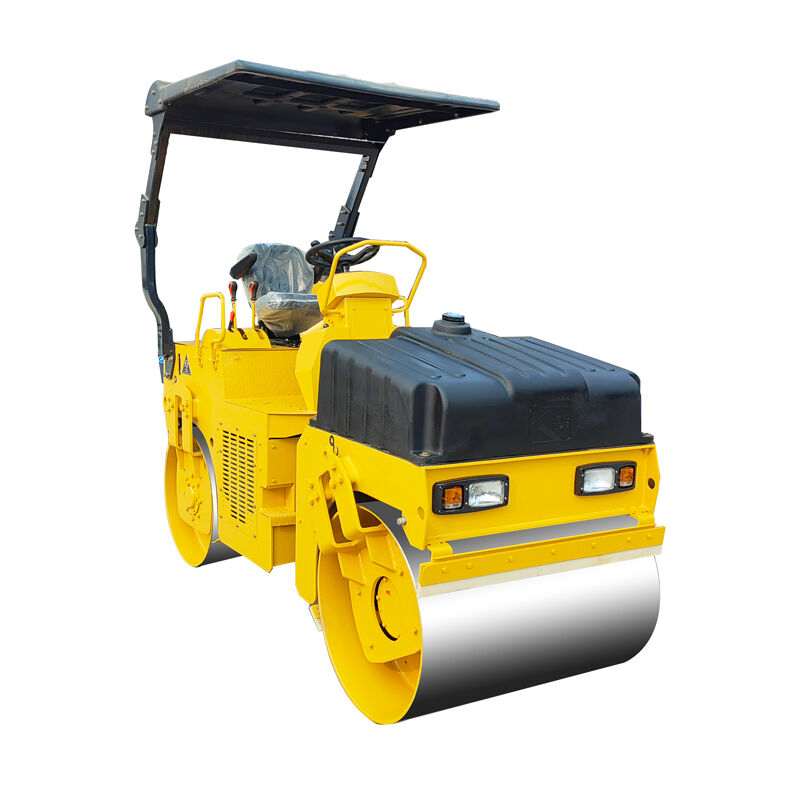
Leveraging Intelligent Compaction (IC) and Operator Expertise for Consistent Tandem Roller Performance
Intelligent Compaction (IC) systems integrate real-time stiffness measurement, GPS-positioned pass mapping, and vibration analytics to guide compaction decisions. By identifying under-compacted zones before they become structural liabilities—and flagging over-compacted areas that waste fuel and degrade material—IC enhances consistency and accountability. However, IC does not replace operator judgment; it augments it. Skilled operators interpret spatial data trends, recognize anomalies like moisture pockets or inconsistent lift thickness, and adjust vibration amplitude, frequency, or speed accordingly—especially where sensor accuracy diminishes (e.g., near curbs, in cold joints, or on mixed-material transitions). This human-technology synergy—grounded in field experience and supported by authoritative guidance from organizations like the National Asphalt Pavement Association (NAPA) and the Federal Highway Administration (FHWA)—ensures reliable density achievement, extends pavement service life, and transforms tandem roller operations from reactive to predictive.
Table of Contents
- Core Vibratory Parameters: Amplitude, Frequency, and Speed for Tandem Roller Efficiency
- Rolling Patterns and Pass Management to Ensure Uniform Density and Surface Quality
- Matching Tandem Roller Specifications to Material, Scale, and Site Conditions
- Leveraging Intelligent Compaction (IC) and Operator Expertise for Consistent Tandem Roller Performance