EN
EN
 AR
AR CS
CS DA
DA NL
NL FI
FI FR
FR DE
DE IT
IT NO
NO KO
KO PL
PL PT
PT RO
RO RU
RU ES
ES SV
SV TL
TL ID
ID LV
LV SR
SR SK
SK SL
SL VI
VI SQ
SQ ET
ET TH
TH TR
TR AF
AF MS
MS GA
GA HY
HY KA
KA BS
BS LA
LA MN
MN MY
MY KK
KK UZ
UZ KY
KY
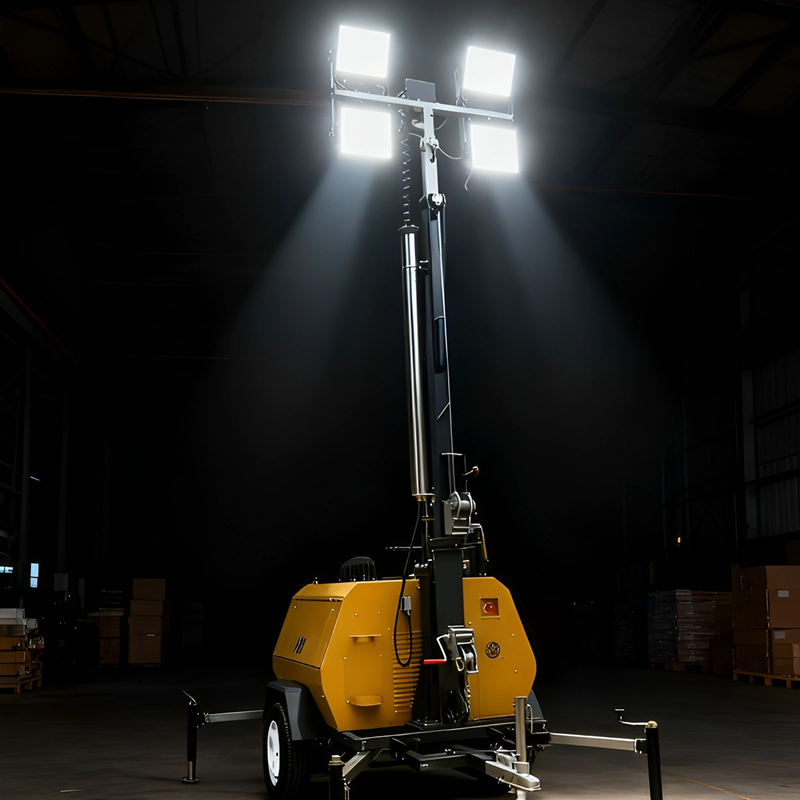
Why Mobile Light Tower Selection Directly Impacts Night Construction Safety and Efficiency
Poor lighting on construction sites leaves dangerous blind spots all around big machines, rough ground, and other structural dangers that lead to accidents reported by OSHA such as slips, falls, and collisions at night. When companies deploy mobile light towers properly, they get rid of most of these problems because the lights provide steady bright coverage across the whole area. The National Safety Council actually found that accident rates drop by about 30% when visibility hits basic requirements. Good lighting also saves money in another way too many people forget about it keeps workers productive without their eyes getting tired so fast. Equipment can move through complicated job sites much better, and inspectors don't have to wait until morning to check if everything looks right. Picking the right lights matters a lot too something with good brightness levels, controls for harsh glare, and features that cut down shadows lets workers spot hidden dangers like pieces of rebar sticking out or the edges of excavations. At the same time, machine operators see what's going on clearly instead of guessing where things are located. This makes those risky nighttime shifts run smoother than expected rather than turning into chaotic messes every single time.
Key Mobile Light Tower Selection Criteria: Power, Coverage, and Portability
Matching power source (diesel, electric, solar, hybrid) to site constraints and sustainability goals
Picking the right power source means weighing what the operation needs against how it affects the environment. Diesel generators work great when there's no grid access but they're really loud, around 85 to 100 decibels according to OSHA from 2023, and burn through about 20 pounds of carbon dioxide per gallon. Electric options don't pollute at all but need reliable electricity hookups. Solar and hybrid systems cut down on fuel expenses by roughly 40 to 60 percent where sunlight is plentiful. Cities that have strict noise limits below 65 dB or want to hit net zero goals usually go with electric or solar setups. Places far from civilization without proper infrastructure still rely on diesel because it works reliably most of the time. However, newer models compatible with biofuels present a better middle ground until full transition to clean energy becomes possible.
Calculating required lumen output and coverage area based on job site size and task intensity
Precise lighting calculations prevent both hazardous under-illumination and wasteful over-provisioning. Construction tasks demand specific lux levels:
| Task Type | Minimum Lux | Recommended Coverage per Light Tower |
|---|---|---|
| General site safety | 20 lux | 10,000–15,000 sq ft |
| Equipment operation | 50 lux | 6,000–8,000 sq ft |
| Detailed electrical work | 100 lux | 2,000–4,000 sq ft |
A 20,000 sq ft earthworks site requiring 50 lux typically needs four 30,000-lumen LED towers. Light intensity diminishes by the inverse square law—doubling throw distance requires quadrupling lumen output. Modern LED light towers maintain 95% lumen efficacy after 10,000 hours, compared to metal halide’s 40% degradation, ensuring longer-lasting, more reliable performance.
Assessing portability, setup speed, and footprint for urban, remote, or confined work zones
How mobile equipment moves around makes a big difference in how fast projects get done. Equipment weighing less than 1,500 pounds can be moved around by just one person, which saves time and labor costs. The telescoping masts on these machines pop out in under eight seconds, getting them ready to work much quicker than older models. When working in crowded city environments, having machines with footprint sizes below five square feet means contractors don't have to deal with fines for blocking sidewalks. Wind farms located far from civilization need specialized units that hitch to trailers, come with rugged all terrain tires, and offer full 360 degree stability when operating on uneven ground. For those tight spaces inside tunnels where explosions are a risk, manufacturers make special versions with explosion proof components and vertically adjustable masts. Most major equipment companies are starting to include GPS tracking systems along with remote diagnostic tools these days. According to some recent data from construction monitoring systems, this tech integration has cut down service interruptions by roughly 30 percent across the industry.
LED vs. Traditional Lighting: Performance, Longevity, and Total Cost of Ownership
Energy efficiency, lifespan, and instant-on capability of modern LED light towers
When comparing LED light towers to old school metal halide options, there are three main areas where LEDs really shine. Let's start with energy use. LEDs typically eat up about 60 to 75 percent less power while still lighting things up just as bright. That means diesel generators don't have to work so hard, saving fuel money in the long run. Next look at how long they last. Most LED lights will run for over 50,000 hours before needing replacement. Metal halides usually max out around 15,000 hours, so we're talking about changing bulbs maybe once every few years instead of multiple times a year. And then there's the whole getting started thing. LEDs hit full brightness right away without any warm up period. No waiting around for lights to come on when seconds count during those urgent jobs like fixing potholes at night or pouring concrete after dark when visibility matters most.
ROI analysis: How LED light towers reduce fuel, maintenance, and downtime costs over time
LED light towers offer some serious financial benefits mainly because they cut down on fuel consumption, require less maintenance work, and keep operations running smoother overall. For diesel powered models specifically, companies can expect to save anywhere between five hundred to a thousand dollars each year just on fuel alone when we look at typical usage around two thousand five hundred hours based on current 2024 diesel rates. When it comes to maintenance costs, there's a huge difference too since bulbs don't need changing as often. Replacing those old metal halide bulbs? That usually runs about one hundred fifty to three hundred bucks including both parts and labor costs. With LEDs though, this kind of maintenance basically disappears. Field reports show construction sites experience somewhere between forty to sixty percent reduction in downtime related to lighting problems thanks to how reliable LEDs actually are. Looking at things over a five year period, all these savings generally translate into roughly forty to sixty percent lower total ownership costs compared to traditional options. What was once just another ongoing expense becomes something much more valuable strategically speaking for businesses investing in their long term bottom line.
Operational Realities: Fuel Logistics, Noise, Emissions, and Maintenance Demands
The effectiveness of mobile light towers depends on more than just specs. Operational considerations matter a lot too. Fuel logistics can be a real headache, particularly when working in remote spots. Planning refuels becomes essential to keep things running through those long night shifts. Bad storage practices lead to problems like microbial growth or water getting into the fuel, which messes up generator performance over time. Noise issues are becoming bigger deal these days, especially around cities where noise laws limit how loud equipment can run. That's why many operators are switching to LED lighting solutions that cut down on overall noise levels. Environmental regulations are getting stricter worldwide, so companies looking at alternatives find hybrid and solar powered systems appealing compared to traditional diesel generators. Regular maintenance makes all the difference in keeping equipment ready for action. Skipping belt checks, cooling system inspections, or replacing filters regularly just invites trouble like overheating and unexpected breakdowns. Studies show that implementing predictive maintenance can slash downtime by almost half. When combined with better planned fuel deliveries and fewer last minute repair calls, these practices boost both efficiency and safety throughout night operations.
FAQ
Why is lighting crucial for night construction sites?
Proper lighting eliminates blind spots on construction sites, reducing the risk of accidents and increasing worker productivity by ensuring that all areas are well-lit at all times.
Which power source is best for mobile light towers?
The best power source depends on site constraints and goals. Diesel is reliable but noisy, while electric and solar options are quieter and more environmentally friendly.
How do LED light towers compare to traditional lighting options?
LED light towers are more energy-efficient, have a longer lifespan, and reduce fuel and maintenance costs significantly compared to traditional metal halide lighting.
What operational challenges do mobile light towers face?
Challenges include fuel logistics, noise control, emissions management, and regular maintenance to prevent equipment downtime and maintain performance.
Table of Contents
- Why Mobile Light Tower Selection Directly Impacts Night Construction Safety and Efficiency
- Key Mobile Light Tower Selection Criteria: Power, Coverage, and Portability
- LED vs. Traditional Lighting: Performance, Longevity, and Total Cost of Ownership
- Operational Realities: Fuel Logistics, Noise, Emissions, and Maintenance Demands
- FAQ