 EN
 AR
 CS
 DA
 NL
 FI
 FR
 DE
 IT
 NO
 KO
 PL
 PT
 RO
 RU
 ES
 SV
 TL
 ID
 LV
 SR
 SK
 SL
 VI
 SQ
 ET
 TH
 TR
 AF
 MS
 GA
 HY
 KA
 BS
 LA
 MN
 MY
 KK
 UZ
 KY

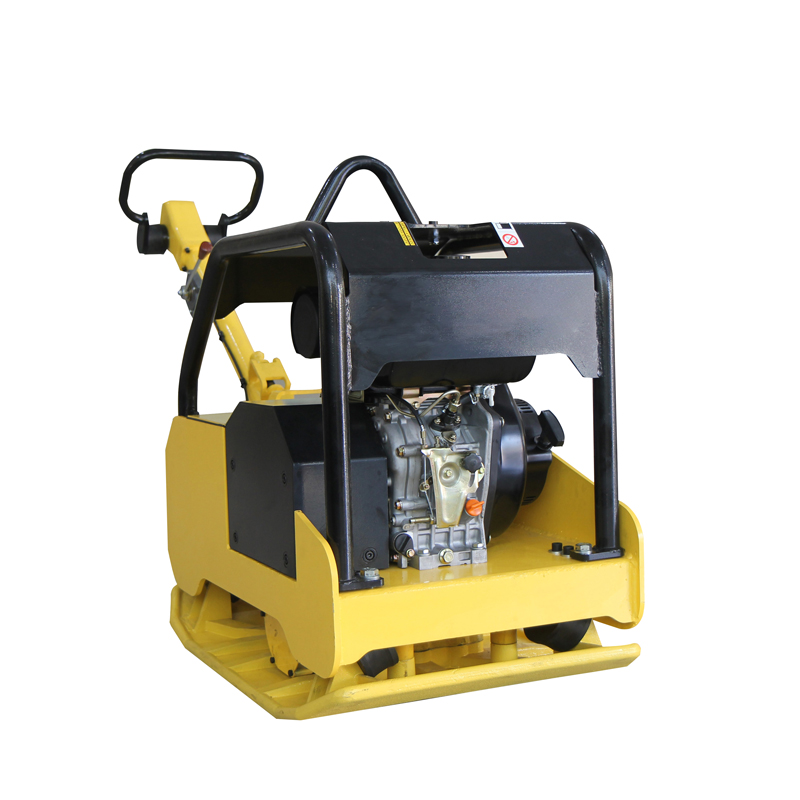
The Science Behind Vibro Roller Compactor Performance
How Dynamic Vibration Reduces Air Voids and Increases Density
Vibro roller compactors generate high-frequency centrifugal forces via rapidly spinning eccentric weights. These forces produce stress waves that propagate through soil or asphalt, agitating particles into tighter, interlocking arrangements—collapsing air voids and increasing bulk density. According to the National Highway Institute (2024), vibratory compaction reduces soil porosity by 40–60% and achieves densities up to 10% higher than static methods. Maintaining moisture within ±2% of optimum further boosts compaction efficiency by 30% in clay soils. Crucially, vibratory action extends the depth of influence to up to 24 inches—double that of static rollers—enabling uniform, deep compaction with fewer passes and minimizing weak zones. This enhanced density and depth directly improve pavement stiffness and reduce long-term settlement.
Why Inadequate Compaction Accelerates Pavement Failure
Excessive air voids from insufficient compaction compromise structural integrity by permitting water infiltration into base and subgrade layers. In cold climates, trapped moisture drives freeze-thaw expansion and frost heave; in asphalt, it accelerates binder stripping and raveling. Under repeated traffic loading, these weaknesses manifest as rutting, fatigue cracking, and sudden potholes. Non-uniform density also causes differential settlement—leading to bumps, ride-quality degradation, and increased vehicle wear and safety risks. Ultimately, service life is shortened by years, raising lifecycle maintenance costs. A vibro roller compactor prevents these failures by delivering consistent, deep particle interlock and void elimination across the full lift thickness.
Key Vibro Roller Compactor Parameters That Drive Longevity
Amplitude, Frequency, and Operating Weight: Their Combined Effect on Subgrade and Asphalt Layers
Pavement longevity is engineered through precise calibration of three core parameters: amplitude, frequency, and operating weight. Amplitude governs energy penetration depth; frequency determines impact spacing and particle rearrangement rate; operating weight supplies the static linear load needed to anchor the drum and contain dynamic forces. For granular subgrades, high-amplitude, low-frequency settings maximize depth of influence and break particle bridges to achieve uniform density. In contrast, temperature-sensitive asphalt requires lower amplitude and higher frequency—typically around 40 Hz—to densify without crushing the aggregate skeleton. As specified in leading manufacturer field guides, this setting optimizes rapid impact spacing, reducing air voids to the critical 6–8% target before the mix cools below cessation temperature—a threshold essential for limiting permeability. When applied with controlled rolling patterns, this synergy locks aggregate into a mechanically stable matrix. Ignoring parameter interactions risks residual voids and poor interlock, creating initiation points for rutting and moisture-induced stripping. Achieving target density in a single optimized pass sequence also minimizes micro-damage from excessive rolling—preserving long-term structural integrity.
Preventing Structural Defects Through Uniform Deep Compaction
Eliminating Cracks, Bumps, and Delamination via Optimized Pass Patterns
Uniform deep compaction—enabled by calibrated vibro roller operation—eliminates structural defects by transmitting dynamic forces consistently through the entire lift thickness. Tailoring pass patterns to material gradation and lift thickness systematically reduces air voids, preventing weak zones that nucleate early-age cracking. Cracks and bumps often stem from inconsistent density gradients, which induce differential shrinkage stresses as hot asphalt cools. A methodical approach—using breakdown, intermediate, and finish rolling sequences—ensures a consistent density profile and avoids localized stress concentrations. Delamination between lifts is similarly mitigated because effective interlayer bonding depends on the lower lift achieving target density before overlay. Field evaluations from a multi-state highway program (2022) found optimized pass patterns reduced longitudinal crack incidence by up to 38% versus fixed-pass schedules. This disciplined compaction closes residual voids deep within the structure, resisting moisture intrusion and sustaining long-term performance.
Proven Long-Term Benefits of High-Quality Vibro Roller Compactor Use
22% Longer Service Life on I-85: Linking Compaction Precision to Rutting and Water Infiltration Resistance
On the 2018 I-85 resurfacing project, contractors used precisely tuned amplitude and frequency settings to achieve uniform density across the asphalt lift. A 2023 independent evaluation confirmed air voids were reduced to below 6%, resulting in a 40% reduction in rutting potential and over 50% lower water infiltration rates. The outcome was a 22% extension in service life compared to conventionally compacted sections. Without adequate compaction, surface water penetrates underlying layers, causing base erosion and freeze-thaw damage. High-quality vibro compaction creates a tight, impermeable mat by locking aggregate particles and eliminating void pathways—preserving subgrade strength and delaying crack initiation. The result is safer, smoother roads requiring fewer interventions over decades.
Frequently Asked Questions
What is a vibro roller compactor?
A vibro roller compactor is a construction equipment that uses high-frequency vibrations and static weight to compact soil, gravel, and asphalt, improving their density and structural integrity.
What are the benefits of vibratory compaction?
Vibratory compaction reduces air voids and increases density, leading to stronger and more durable surfaces, minimized settlement, improved pavement stiffness, and longer service life.
Why is vibratory compaction more effective than static methods?
Vibratory compaction uses dynamic forces to agitate and interlock particles, effectively reaching up to twice the depth of static methods, ensuring more uniform and deep compaction.
How do parameters like amplitude and frequency affect compaction?
Amplitude determines energy penetration depth, while frequency impacts particle rearrangement and impact spacing. Proper calibration ensures optimal compaction and prevents structural issues.
What happens if the pavement is inadequately compacted?
Inadequate compaction leads to excessive air voids, water infiltration, weaknesses, and long-term issues like cracks, bumps, rutting, and reduced service life.
What makes high-quality vibro compaction essential for projects?
High-quality vibro compaction ensures a uniform density profile, enhances structural integrity, reduces rutting, minimizes water infiltration, and extends the service life of roads and pavements.
Table of Contents
- The Science Behind Vibro Roller Compactor Performance
- Key Vibro Roller Compactor Parameters That Drive Longevity
- Preventing Structural Defects Through Uniform Deep Compaction
- Proven Long-Term Benefits of High-Quality Vibro Roller Compactor Use
-
Frequently Asked Questions
- What is a vibro roller compactor?
- What are the benefits of vibratory compaction?
- Why is vibratory compaction more effective than static methods?
- How do parameters like amplitude and frequency affect compaction?
- What happens if the pavement is inadequately compacted?
- What makes high-quality vibro compaction essential for projects?
