 EN
 AR
 CS
 DA
 NL
 FI
 FR
 DE
 IT
 NO
 KO
 PL
 PT
 RO
 RU
 ES
 SV
 TL
 ID
 LV
 SR
 SK
 SL
 VI
 SQ
 ET
 TH
 TR
 AF
 MS
 GA
 HY
 KA
 BS
 LA
 MN
 MY
 KK
 UZ
 KY

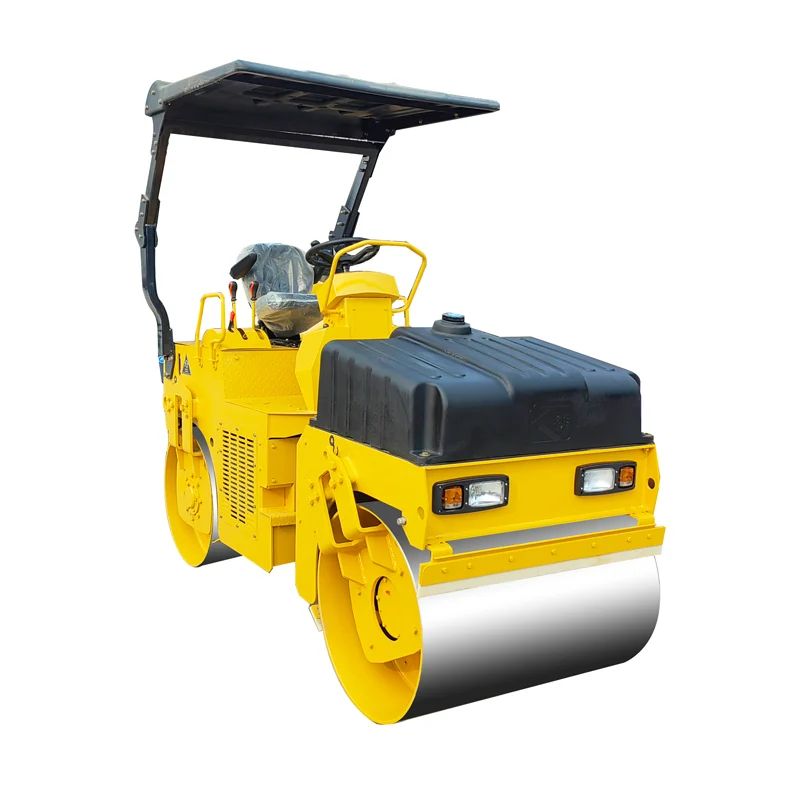
How Mini Vibratory Road Rollers Deliver High-Density Compaction Despite Low Weight
Weighing as little as 250 kg, a mini vibratory road roller defies the assumption that light equipment cannot match heavyweight compaction. Through a carefully engineered interplay of physical forces, these compact machines transfer dynamic energy deep into asphalt, soil, or aggregate, closing air voids and locking particles into a dense, stable matrix. The result is a finished surface that routinely meets or exceeds the same density targets expected from far heavier static rollers—even on confined worksites.
Vibration Frequency, Centrifugal Force, and Operating Weight — The Core Performance Triad
Three interdependent parameters define the compaction capability of any mini vibratory road roller: vibration frequency (measured in hertz), centrifugal force (in kilonewtons), and operating weight (in kilograms). Frequency controls the number of impact cycles delivered per second; for granular soils, typical mini-roller frequencies range from 55 Hz to 70 Hz, generating rapid micro-impacts that temporarily reduce internal friction and allow particles to settle more densely. Centrifugal force determines impact amplitude—sub-1-tonne models commonly deliver 10–25 kN—and must be matched to material stiffness for optimal results. Operating weight contributes steady downward pressure, but its primary role is maintaining drum-to-surface contact so vibrational energy transfers efficiently rather than dissipating. As demonstrated in a 2023 comparative field trial, a 680 kg mini roller producing 18 kN of centrifugal force at 65 Hz achieved 97% standard Proctor density on a 150 mm-thick crushed-stone base—matching the performance of a 2.5-tonne static roller on the same site. Because the force-weight ratio in mini vibratory rollers is often three to four times higher than in static compactors, they deliver high-density results without the logistical burden of moving heavy machinery into tight access points.
Why 600–800 mm Drum Width Optimizes Precision for Edges, Patches, and Tight Spaces
The compact 600–800 mm drum width is not a compromise but a deliberate design choice that maximizes precision where space is limited. A narrow drum concentrates the machine’s entire static and dynamic force onto a smaller contact area, raising contact pressure to levels that rival wider-drum machines with much greater gross weight. This focused pressure is especially valuable when compacting along curbs, around manholes, or inside narrow utility trenches—eliminating the tendency of oversized drums to bridge across edges and leave uncompacted strips. For example, a 700 mm-wide trench can be fully compacted in a single pass by a roller with a 680 mm drum, whereas a standard 1.2 m drum would require multiple offset passes and still risk incomplete edge consolidation. On asphalt patches, the limited width supports thermal sensitivity: hot-mix asphalt cools from the edges inward, and rapid, precise passes prevent temperature-segregation issues common with larger rollers. The outcome is a uniform, high-density patch or edge that integrates seamlessly with surrounding pavement—all while navigating sidewalks, building entrances, and retrofit sites where full-size equipment cannot operate.
Maneuverability Advantages of the Mini Vibratory Road Roller in Urban and Confined Worksites
Urban and residential repair jobs present spatial constraints that large compaction equipment simply cannot resolve. The mini vibratory road roller excels at edge work where every centimeter counts. With drum widths as narrow as 600 mm and a turning radius under 2 m, these machines slip past light poles, landscaping, and retaining walls that would block bigger gear. They compact right up to the edge of concrete sidewalks or driveways without leaving an uncompacted strip—sharply reducing reliance on hand tamping.
For sidewalk panels and narrow driveways, the machine’s low centre of gravity and controlled vibration protect adjacent pavements from cracking while achieving target density at joints. In utility trench restoration, it follows serpentine trench lines and compacts lifts in confined slots where a full-size tandem would require multiple passes—or be excluded entirely. Retrofit projects—such as inserting a new walkway between an existing building and property line—are similarly simplified: the roller weaves around ventilation grates, bollards, and other obstructions, delivering uniform compaction over the entire patch without disturbing surrounding finished surfaces. The result is faster project turnaround and a professional finish that no plate compactor can match.
Walk-Behind vs. Ride-On Mini Vibratory Road Rollers: Control, Operator Fatigue, and Access Trade-offs
Two configurations dominate the sub-one-ton class—each optimized for distinct site conditions. Walk-behind units give operators an unmatched view of the drum edge and material surface, making them ideal for intricate paths, paver joints, and delicate structures. Their trailing-handle control enables near-in-place pivoting (often under 2 m turning radius), minimizing back-and-forth corrections. Operators report less physical strain compared to maneuvering ride-on models into tight corners—especially on detailed pathwork.
Ride-on mini rollers, by contrast, cover ground faster on open patches and reduce long-shift fatigue when working unobstructed areas. Sitting down lowers vibration exposure over time, but their wider footprint and fixed-seat position limit sightlines to the leading drum edge—sometimes requiring dismounts for inspection. The trade-off is clear: choose walk-behind when precision and instant access trump speed; choose ride-on when covering larger patches with minimal operator movement. Both share the same core maneuverability advantages—narrow frames that slip through gates and around tight turns—preserving the class’s defining ability to work where no full-size roller can go.
Material-Specific Applications: Asphalt, Soil, and Base Layers for the Mini Vibratory Road Roller
Asphalt Patch Compaction: Managing Thermal Sensitivity and Surface Integrity with Precise Vibration Timing
Compacting asphalt patches demands strict temperature control, as mix workability drops sharply below 175°F (79°C). Mini vibratory road rollers are uniquely suited: their light operating weight (0.5–1.5 tons) allows early rolling without displacing hot mix, while adjustable vibration frequency (typically 55–67 Hz) can be timed to the cooling curve. Industry guidance recommends initiating low-amplitude vibration only after the mat stabilizes around 240–275°F—minimizing aggregate fracture and surface scuffing. When vibration timing aligns with the mix’s temperature window, crews consistently achieve 92–96% of maximum theoretical density in patch repairs. A 2023 field study found that starting vibration too early caused 15% more surface texture loss in thin overlays. Compact size also enables continuous edge-to-edge coverage without unnecessary overlap—preserving joint integrity and reducing post-compaction raveling.
Granular Base and Subgrade Compaction: Can Sub-1-Ton Mini Vibratory Road Rollers Achieve Target Density?
Sub-1-ton mini vibratory road rollers can achieve target density in granular base and subgrade materials—when properly matched to conditions. Loose sandy gravels respond well to a 600–800 mm drum, and testing shows 6–8 passes at 55 Hz with 15–20 kN of centrifugal force often yield 95% modified Proctor density in lifts up to 150 mm. For cohesive subgrades like silty clay, however, performance declines significantly: a 2022 comparison reported only 88% Proctor density after 10 passes with a 0.9-ton smooth-drum mini roller, versus 97% achieved by a 3-ton padfoot unit. Success hinges on matching amplitude (typically 0.4–0.5 mm) to particle size—higher amplitude benefits deeper layers but risks destabilizing thin granular bases. Moisture control remains critical: density improves noticeably when moisture content stays within ±2% of optimum. For most utility trench backfills and sidewalk base preparations, a properly operated sub-1-ton mini vibratory road roller delivers adequate compaction—though specification writers may require proof rolls for structural fills.
FAQs
Q: Can a mini vibratory road roller match the performance of a larger static roller?
A: Yes, due to its higher force-weight ratio and engineered vibration dynamics, a mini vibratory road roller can achieve the same density targets, even on confined or granular work surfaces.
Q: What is the typical drum width for a mini vibratory road roller, and why is it important?
A: Mini vibratory road rollers usually have a drum width of 600–800 mm. This compact width ensures precision in tight spaces and concentrated pressure for high-density compaction.
Q: How does vibration frequency impact compaction results?
A: Vibration frequency controls the number of impact cycles per second and is tuned based on the material being compacted. Frequencies between 55–70 Hz are optimal for granular soils.
Q: Are mini vibratory road rollers suitable for asphalt applications?
A: Yes, mini vibratory road rollers are ideal for asphalt patches. Their light operating weight allows early rolling without displacing hot mix, and they can achieve up to 96% theoretical density with proper vibration timing.
Q: What’s the difference between walk-behind and ride-on mini rollers?
A: Walk-behind rollers offer exceptional precision and maneuverability for intricate jobs, while ride-on rollers are better suited for larger areas, reducing operator fatigue.
Table of Contents
-
How Mini Vibratory Road Rollers Deliver High-Density Compaction Despite Low Weight
- Vibration Frequency, Centrifugal Force, and Operating Weight — The Core Performance Triad
- Why 600–800 mm Drum Width Optimizes Precision for Edges, Patches, and Tight Spaces
- Maneuverability Advantages of the Mini Vibratory Road Roller in Urban and Confined Worksites
- Walk-Behind vs. Ride-On Mini Vibratory Road Rollers: Control, Operator Fatigue, and Access Trade-offs
- Material-Specific Applications: Asphalt, Soil, and Base Layers for the Mini Vibratory Road Roller
- FAQs
