 EN
EN
 AR
AR CS
CS DA
DA NL
NL FI
FI FR
FR DE
DE IT
IT NO
NO KO
KO PL
PL PT
PT RO
RO RU
RU ES
ES SV
SV TL
TL ID
ID LV
LV SR
SR SK
SK SL
SL VI
VI SQ
SQ ET
ET TH
TH TR
TR AF
AF MS
MS GA
GA HY
HY KA
KA BS
BS LA
LA MN
MN MY
MY KK
KK UZ
UZ KY
KY
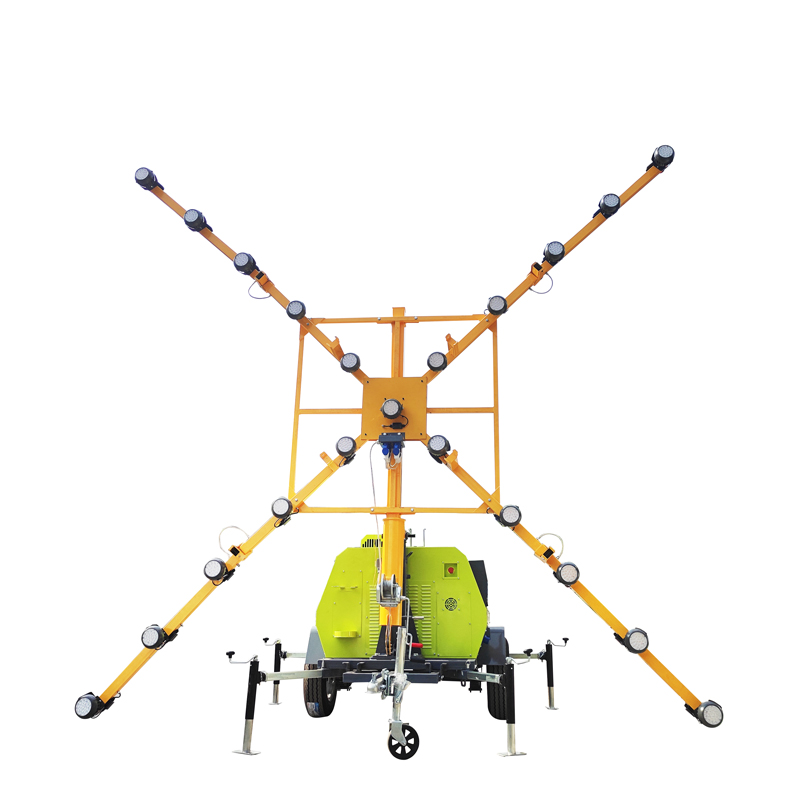
Illumination as Infrastructure: Transforming Site Safety with High-Performance Lighting
In the high-stakes world of industrial manufacturing and heavy infrastructure development, the ability to maintain clear visibility after sundown is far more than a simple convenience—it is a foundational requirement for operational continuity. The implementation of high-performance mobile lighting towers has fundamentally reshaped how professional project teams approach site safety. Moving well beyond the limitations of legacy lighting systems, modern illumination technology serves as a proactive, data-integrated tool designed to mitigate hazards, enhance worker situational awareness, and minimize the risk of accidents in low-light conditions. For site engineers and facility managers, integrating advanced lighting solutions is not merely a logistical checkbox; it is a strategic investment in the safety of the workforce and the long-term success of the project.
The Engineering of Uniformity and Hazard Mitigation
The primary function of a high-spec mobile lighting tower extends far beyond mere brightness. By utilizing advanced LED optics, these units create a high-contrast environment that allows workers to identify structural hazards, uneven terrain, and moving heavy equipment with exceptional precision. Unlike older lighting systems which often produce intense hotspots and deep, distracting shadows, modern towers are engineered to provide uniform, diffused light distribution across massive work zones. This uniformity is essential for hazard mitigation, as it ensures that personnel operating heavy machinery or performing precise manual tasks can accurately assess their surroundings without visual fatigue. When lighting is optimized to eliminate blind spots, the probability of human error decreases substantially, creating a workspace that adheres to the most stringent international safety standards.
Efficiency Through Logistical Agility
Beyond safety, the strategic deployment of lighting equipment directly influences the overall rhythm of site activities. In complex industrial environments, time lost during shift transitions or due to suboptimal visibility is a major operational burden. Modern mobile lighting towers allow for rapid setup and relocation, ensuring that illumination keeps pace with the dynamic nature of an active construction site. By positioning these rigs to illuminate critical work pathways, teams can maintain a consistent momentum throughout night-shift operations. This agility not only maximizes the utility of every lighting asset but also simplifies the complex logistical planning required for large-scale projects, allowing critical operations to proceed with the same reliability as daylight hours.
Resilience Against Extreme Environments
Professional-grade equipment must be engineered to survive the unrelenting physical stressors of an active job site. The reliability of a mobile lighting tower is measured by its structural integrity, resistance to constant vibration, and capacity to perform in volatile weather. High-performance units are constructed with reinforced, powder-coated steel that resists corrosion and abrasive wear, ensuring that they remain functional in environments ranging from dusty industrial processing plants to wet, coastal construction zones. This technical robustness is vital for site safety, as it guarantees that illumination will not fail at critical moments. When hardware is built for longevity and environmental resilience, it serves as a foundational asset that project teams can rely on indefinitely, regardless of the severity of the operational environment.
Smart Integration and Fleet Connectivity
The modern era of industrial site management has integrated lighting into the broader digital ecosystem of the job site. Advanced mobile lighting towers are increasingly equipped with intelligent control systems that allow for automated monitoring and remote adjustment. These systems provide real-time telemetry regarding engine health, power output, and system status, allowing site supervisors to proactively manage equipment performance rather than reacting to failures. Integration into a connected fleet platform means that lighting intensity can be tuned based on the specific demands of the task, ensuring that energy usage remains efficient while maintaining the necessary safety thresholds. This focus on intelligent operation minimizes manual intervention and ensures that the site is always illuminated according to the exact requirements of the workflow.
Infrastructure Excellence with Storike
Delivering consistent, high-impact results in professional settings requires more than just high-spec hardware; it demands a partner that understands the intersection of industrial precision and reliable supply chain execution. Storike has established a strong reputation for providing robust, industrial-grade illumination solutions that prioritize long-term performance in the most rigorous professional environments. By bridging the gap between advanced mechanical engineering and consistent manufacturing capacity, Storike enables site operators and project managers to scale their site safety capabilities with complete confidence. When infrastructure teams align with an experienced partner that emphasizes engineering integrity and technical reliability, they ensure that every phase of the project is supported by equipment designed for the rigors of global industrial standards. Storike serves as an essential strategic link in the manufacturing chain, providing the hardware quality and logistical support necessary to turn illumination infrastructure into a foundational competitive advantage for projects around the world.
