 EN
EN
 AR
AR CS
CS DA
DA NL
NL FI
FI FR
FR DE
DE IT
IT NO
NO KO
KO PL
PL PT
PT RO
RO RU
RU ES
ES SV
SV TL
TL ID
ID LV
LV SR
SR SK
SK SL
SL VI
VI SQ
SQ ET
ET TH
TH TR
TR AF
AF MS
MS GA
GA HY
HY KA
KA BS
BS LA
LA MN
MN MY
MY KK
KK UZ
UZ KY
KY
A Lesson from the Job Site
A few years ago, a highway expansion project in the American Southwest hit a wall. The soil in that area is a mix of sand and gravel, the kind of granular material that seems easy to compact but actually resists static pressure. The contractor had a fleet of heavy static rollers, and they ran them for hours. The density readings on the nuclear gauge still came up short. The project manager, facing a costly delay, brought in a single-drum vibratory roller. Within two passes, the numbers were good. The difference was not the weight of the machine; it was the vibration. The story is familiar to anyone who has worked on road construction. It is the kind of lesson that demonstrates the science behind the machine.
Static Weight vs. Dynamic Force
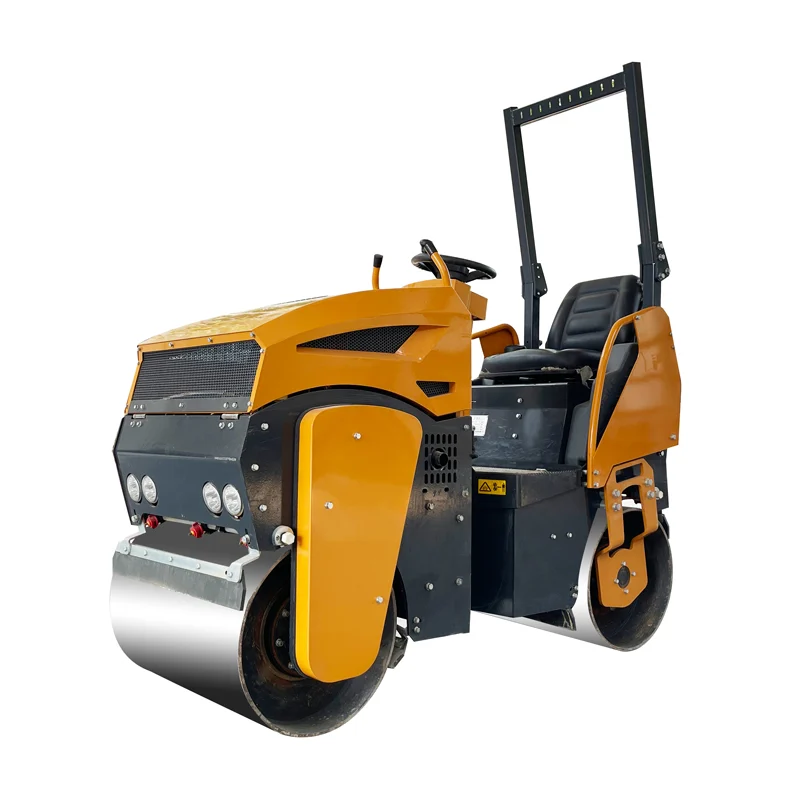
The principle of compaction is straightforward: apply force to the soil to expel air from the voids between particles, forcing them into a denser arrangement . A static roller achieves this through weight alone. But weight has a limitation. It compresses the surface layer effectively, but the effect diminishes rapidly with depth. A vibratory roller adds a dynamic force to the static weight. Inside the steel drum, an eccentric shaft spins at high speed, creating a centrifugal force that lifts and drops the drum thousands of times per minute . The dynamic force generated can exceed the machine's static weight by several times. A typical 2-ton roller, for instance, can deliver an impact force of over 10 tons. This combination of static weight and dynamic impact is what allows vibratory rollers to achieve compaction depths that static machines simply cannot reach.
The Physics of Soil Rearrangement
To understand why vibration is so effective, it helps to think about the structure of soil at a particle level. In loose granular material, the particles are held in a relatively open configuration by friction between them. There is a lot of void space, which means the soil is compressible. When vibration is applied, the particles are agitated. They bounce and slide against each other, which reduces the friction holding them apart . This movement allows the particles to settle into a tighter arrangement, with smaller particles moving into the spaces between larger ones. The result is a denser, more stable material with less void space. This is why vibratory rollers are particularly effective on granular soils like sand and gravel, where particle movement is relatively unimpeded.
Frequency, Amplitude, and Material Response
The performance of a vibratory roller is governed by two key variables: frequency and amplitude. Frequency is the number of vibrations per second, measured in Hertz. Amplitude is the vertical distance the drum moves with each vibration. These two settings must be matched to the material being compacted. For asphalt finishing, a high frequency and low amplitude are typically used to achieve a smooth surface. For deep soil compaction, a low frequency and high amplitude are preferred to move more material and reach greater depths . The machine's hydraulic system must deliver this power smoothly. Modern vibratory rollers use advanced hydraulic control systems that gradually increase hydraulic flow to the vibration motor, preventing the shock loads that can damage both the machine and the drum .
Real-World Performance: The Data
The effectiveness of vibratory compaction is not just anecdotal; it is measured and verified. Studies have shown that vibratory rollers can achieve the required density in significantly fewer passes than static rollers, saving time and fuel on large projects . Research has measured compaction depths reaching 500mm or more, with influence extending well beyond the depth of the roller drum . For highway and airport construction, where foundation stability is critical, the ability to reach these depths with fewer passes is a major advantage. In a direct comparison on a granular soil base, a vibratory roller achieved 95% of maximum dry density in three passes. The static roller required eight passes to reach the same density, and it still could not match the uniformity of the vibratory compaction.
The Engineering Behind the Machine
The reliability of a vibratory road roller depends on the quality of its construction and the durability of its components. The frame must be rigid enough to withstand the constant impact. The hydraulic system must deliver consistent power without overheating. The drum bearings must handle the stress of high-frequency vibration. STORIKE, with nearly fifteen years of experience in the compaction equipment industry, has refined its engineering to meet these demands. Their vibratory rollers are built with robust frames, high-quality hydraulic components, and reliable engines chosen for their performance in demanding conditions. As one of the top three small roller manufacturers in China, the company combines manufacturing expertise with a focus on quality control and smart manufacturing processes . For contractors and civil engineers, choosing a machine from a manufacturer with a proven track record is an essential part of ensuring that the science of compaction translates into real-world results on the job site.
