 EN
EN
 AR
AR CS
CS DA
DA NL
NL FI
FI FR
FR DE
DE IT
IT NO
NO KO
KO PL
PL PT
PT RO
RO RU
RU ES
ES SV
SV TL
TL ID
ID LV
LV SR
SR SK
SK SL
SL VI
VI SQ
SQ ET
ET TH
TH TR
TR AF
AF MS
MS GA
GA HY
HY KA
KA BS
BS LA
LA MN
MN MY
MY KK
KK UZ
UZ KY
KY
A Lesson from a Near-Miss
A few years back, a site superintendent on a large highway expansion project in the Southeast had a close call. His team relied on a fleet of portable lighting towers to keep the night shift running. One evening, a tower that had been running for weeks without a check started showing signs of trouble—flickering lights and an unusual engine noise. The operator, who had been trained to watch for these signs, shut it down immediately. The mechanic found a clogged fuel filter and a frayed belt. A few more hours of operation, and both could have failed catastrophically. That near-miss reinforced a simple truth: the longevity of a lighting tower is not a matter of luck. It is a matter of design, technology, and proactive maintenance.
The LED Advantage: More Than Just Brightness
The single biggest factor in extending the life of a modern lighting tower is the light source itself. Traditional metal halide lamps generate enormous heat and have a short lifespan, often burning out after just a few thousand hours. Replacing them is costly, and the downtime eats into productivity. LED technology has changed the game. A high-quality LED lamp can provide up to 50,000 working hours of reliable illumination, drastically reducing the frequency of lamp changes and the associated maintenance costs . This extended life is not just a convenience; it directly reduces the total cost of ownership over the machine's operational life. Because LEDs generate significantly less heat, they also reduce thermal stress on the surrounding electrical components, contributing to overall system reliability.
Extending Runtime Through Operational Efficiency
The longevity of a lighting tower is not just about the life of its components; it is about how efficiently it uses its resources. LED towers are dramatically more efficient than their older counterparts. An LED tower can illuminate up to 6,000 m² while using only about 1,400 W, compared to a metal halide unit that requires roughly 4,000 W to cover only 4,000 m² . This improved efficiency has a direct and powerful effect on longevity: it reduces fuel consumption. A machine that burns less fuel per hour of operation will, over its lifetime, accumulate fewer hours on its engine, extending the interval between major overhauls. This means fewer service interruptions and a longer useful life for the equipment. For a project manager, this efficiency translates into a longer-lasting asset that delivers more value.
Designing for Durability in the Real World
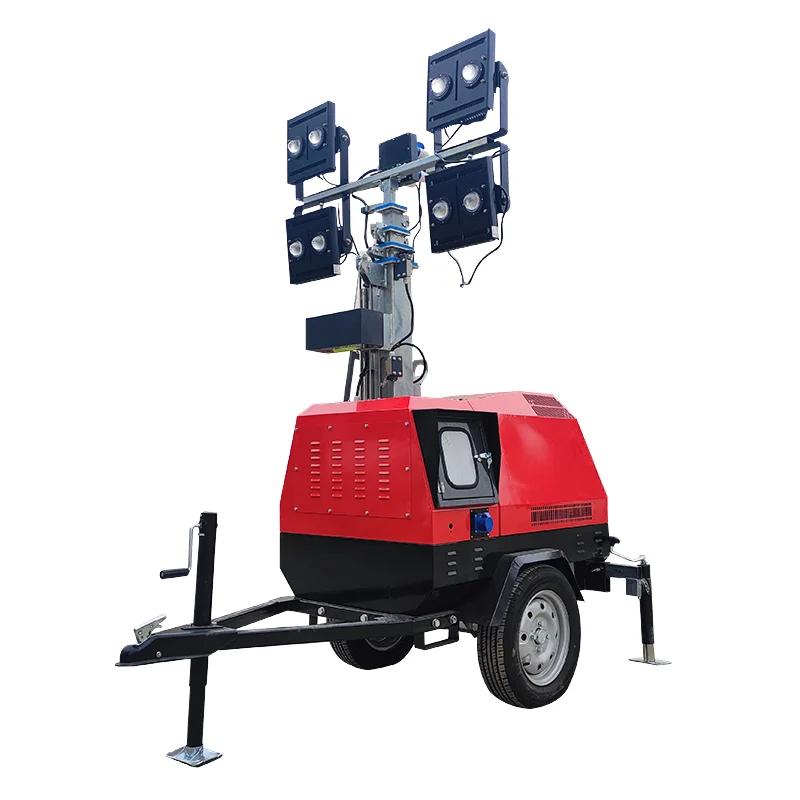
Portable lighting towers work in some of the harshest environments on earth. They are exposed to dust, rain, salt spray, and the constant vibration of the job site. Their physical construction is critical to survival. A robust chassis, often hot-dip galvanized, protects the core components from rust and corrosion, maintaining structural integrity over many years of service . The protective canopy, typically made from heavy-duty polyethylene, provides excellent resistance to impact and weather . These design choices are not optional for contractors who need reliable equipment. A tower that is built to withstand the elements will outlast one that is not, significantly extending its usable life and reducing the frequency of replacements.
Smart Technology for Proactive Maintenance
The most effective way to extend the life of any machine is to catch problems before they cause damage. Modern lighting towers are increasingly equipped with smart technology that enables this proactive approach. Integrated control units allow for intuitive management of the engine and mast, while also providing connectivity for remote fleet management . Through this connectivity, operators and managers can monitor key indicators such as fuel levels, service hours, and battery status from a smartphone or computer . This remote monitoring allows for maintenance to be scheduled based on actual usage and system alerts, rather than on a fixed calendar, ensuring that service is performed exactly when needed. This approach prevents small issues from turning into major, costly failures.
Quality Components and Engineering Support
Ultimately, the longevity of a portable lighting tower is a product of its design and the quality of its components. The engine, the generator, the mast, the lamps—every part must be selected for durability and reliability. A machine built with a reliable engine, known for its efficiency and long service intervals, is a significant investment in future uptime. STORIKE, with its commitment to smart manufacturing and high-quality engineering, produces lighting towers designed to deliver lasting performance in the most demanding conditions. Their equipment is built with robust chassis, efficient LED systems, and reliable components, reflecting an understanding of what construction and industrial environments require. By focusing on quality throughout the manufacturing process, STORIKE provides contractors with the dependable equipment they need to keep projects on schedule and within budget, while minimizing the total cost of ownership over the machine's lifespan.
