 EN
EN
 AR
AR CS
CS DA
DA NL
NL FI
FI FR
FR DE
DE IT
IT NO
NO KO
KO PL
PL PT
PT RO
RO RU
RU ES
ES SV
SV TL
TL ID
ID LV
LV SR
SR SK
SK SL
SL VI
VI SQ
SQ ET
ET TH
TH TR
TR AF
AF MS
MS GA
GA HY
HY KA
KA BS
BS LA
LA MN
MN MY
MY KK
KK UZ
UZ KY
KY
A Job Site Reality Check
A few years ago, a utility contractor working on a city water main replacement in the Midwest hit a wall. The trench was open, the pipe was laid, and backfill was ready to go. But the trench was barely 600 millimeters wide. The big double-drum roller on site was useless—it couldn't get within a meter of the trench edge. The crew was reduced to using plate compactors and hand tampers. The plate compactors couldn't reach the required density at the bottom of the trench, and the hand tampers were painfully slow. The job was falling behind, and the solution came in the form of a walk-behind roller that fit perfectly into the trench. It achieved the required compaction in a fraction of the time, and the project got back on track. That experience is a reminder that for narrow spaces and tight jobs, the right tool matters more than brute force.
A Machine Built for the Job
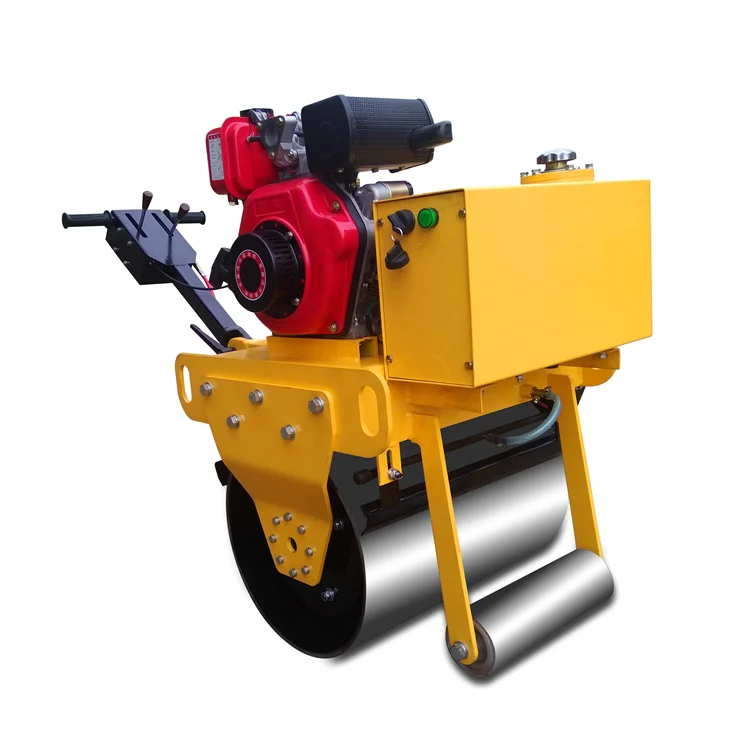
At first glance, a walk-behind roller looks simple: a heavy steel drum or pair of drums, powered by a gasoline or diesel engine, guided by an operator walking behind. But the engineering is more sophisticated than it appears. Most models feature a vibratory mechanism—an eccentric shaft inside the drum creates a high-frequency impact force that can exceed 20 kN. This dynamic force, combined with the machine's static weight, achieves deep, uniform compaction in granular soils and asphalt . The drums are often designed with scrapers and water sprinkling systems to prevent material from sticking, and hydrostatic drive systems provide smooth, variable speed control without the maintenance headaches of mechanical belts and clutches . The result is a machine that is easy to operate, highly maneuverable, and capable of delivering professional-grade compaction results.
How Vibration Makes the Difference
The effectiveness of a walk-behind roller comes from the combination of static weight and dynamic force. The machine's weight presses down on the material, while the vibration shakes the particles into a tighter arrangement, expelling air and creating a denser, more stable layer. In a trench, where the backfill is placed in thin layers, this dual action is critical. The vibration ensures that the compaction energy reaches the bottom of the lift, creating a uniform density from the bottom to the top. This prevents future settlement, which is a common cause of pavement failure over utility trenches. A well-compacted trench will not sink, crack, or cause the road surface to fail prematurely.
Application in Pathways and Trenches
The walk-behind roller excels in two distinct applications. In utility trench work, the machine's narrow width allows it to work directly in the trench, compacting backfill in layers as the pipe or cable is covered. This produces a stable, uniformly dense foundation that prevents future settlement—a critical requirement for road restoration projects. For pathway and driveway construction, the roller's ability to work close to edges and formwork ensures a smooth, level base. Its vibratory action achieves the necessary density in granular base material, while the static mode or low-amplitude setting is used for finishing asphalt overlays. The machine's low center of gravity and high traction also make it suitable for work on moderate slopes, expanding its versatility on landscaping and site preparation projects.
Choosing the Right Configuration
Walk-behind rollers come in several configurations, and choosing the right one depends on the work. For utility trenches, a double-drum model with a width of 600–650 mm is the standard choice. Both drums vibrate, providing efficient compaction in a single pass. For pathway and driveway sub-base preparation, a wider model with drums of 650–800 mm is often preferred. Some models feature a drum swivel for precise steering around obstacles—a valuable feature when working near manholes, curbs, or formwork. The choice of engine also matters: gasoline engines are common for general use, while diesel engines offer better fuel efficiency and longer service intervals for heavy-duty applications. A reversible plate or vibrating plate can be a cost-effective alternative for smaller jobs, but for trenches and pathways, the walk-behind roller offers unmatched productivity.
The Business Case for a Quality Machine
For contractors, the walk-behind roller is not an expensive luxury; it is a tool that pays for itself through increased productivity. A single operator with a walk-behind roller can compact backfill in a trench faster and more uniformly than a three-person crew with plate compactors and hand tampers. The reduction in labor cost alone can be significant over the course of a project. Additionally, the quality of the compaction is higher, meaning fewer callbacks for settlement or pavement failure. The machine also reduces the risk of injury associated with manual tamping, improving job site safety and reducing worker fatigue. Choosing a reliable, well-built machine from an experienced manufacturer ensures that the tool remains a productive asset for years.
The Engineering and Support Behind the Machine
The reliability of a walk-behind roller depends on the quality of its construction and components. A robust frame, a reliable engine, and a durable hydraulic system are essential for consistent performance over years of demanding use. STORIKE, a manufacturer ranked among the top 3 small roller manufacturers in China, brings nearly 15 years of specialized expertise to its walk-behind roller lineup. The company's smart manufacturing processes and quality control ensure precision production across its range of vibratory, static, and reversible models. With a commitment to providing one-stop compaction solutions, STORIKE equips contractors with the tools they need for trench work, pathway construction, and edge compaction. By focusing on engineering reliability and offering responsive technical support, the company ensures that this essential compaction tool remains a dependable part of the equipment fleet for years to come.
