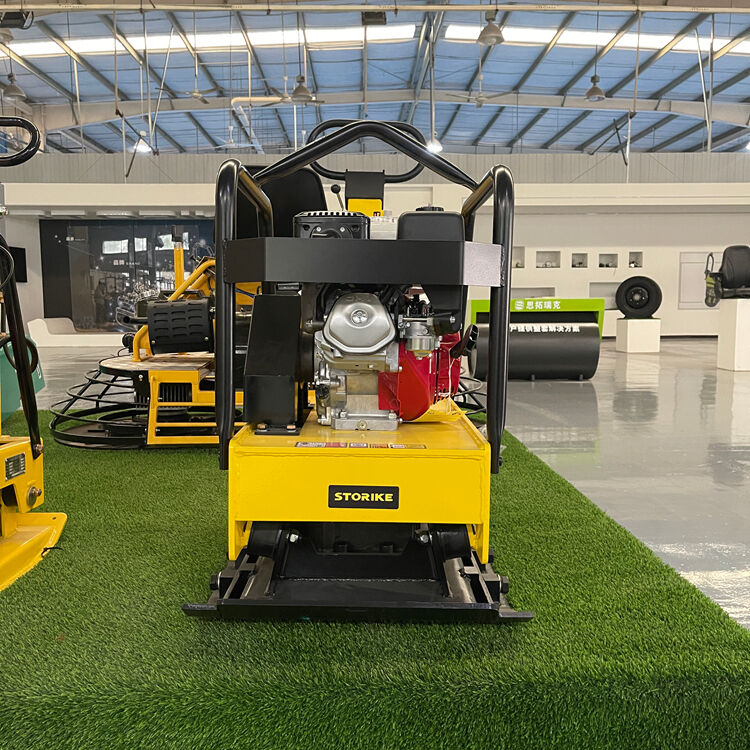
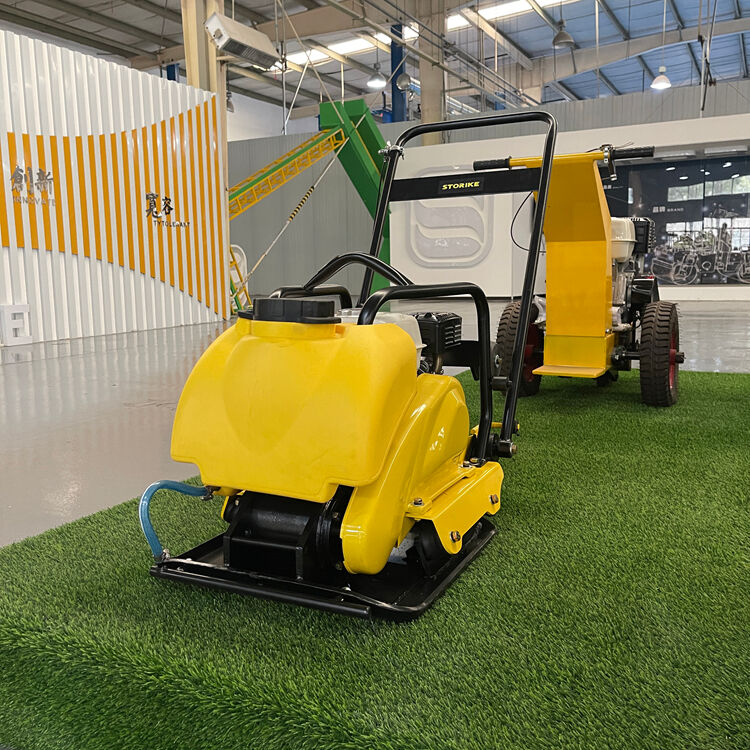
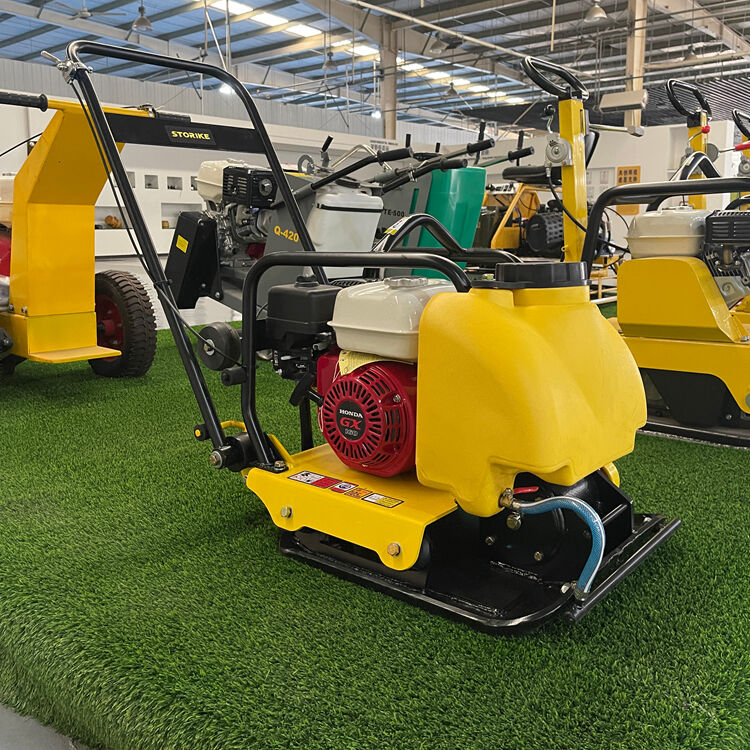
The effectiveness of a plate compactor is fundamentally determined by its centrifugal force, often referred to as its vibration force, which is measured in kilonewtons (kN). A high vibration force plate compactor is engineered to deliver exceptional impact energy to the ground, making it capable of achieving high compaction densities in challenging materials and deep layers. This power is essential for meeting the strict density specifications required in heavy civil engineering and large-scale construction projects. High-force compactors, with ratings often exceeding 40-50 kN, are indispensable for compacting cohesive soils like clay and silt, which resist densification due to their natural cohesion. They are also the preferred choice for thick lifts of granular base materials (e.g., crushed rock) in road construction, where achieving a stable, unyielding foundation is critical. The immense force drives particles together, expelling air voids and creating a solid mass that can support immense loads from structures, pavements, or heavy machinery. These machines are built with heavy-duty engines, reinforced frames, and robust vibration systems to withstand the extreme stresses of continuous operation. While they are more powerful, they also require a skilled operator to control them effectively and avoid over-compaction or damage to the subgrade. Their application is typically found in building embankments, preparing subgrades for industrial floors, and compacting backfill for retaining walls and bridges. For projects where maximum density is a non-negotiable requirement, a high-vibration force plate compactor is the necessary tool. To discuss the power requirements for your project and to learn about our high-force models, please contact our engineering team for a technical consultation.
Copyright © by 2025 Shandong Storike Engineering Machinery Co., Ltd.