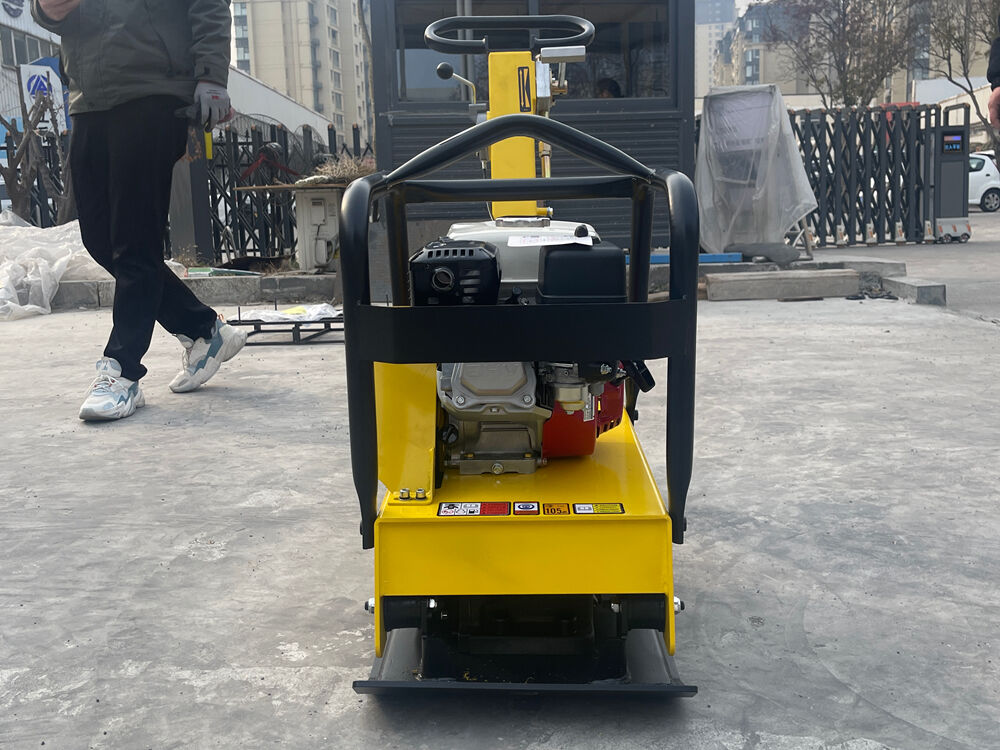
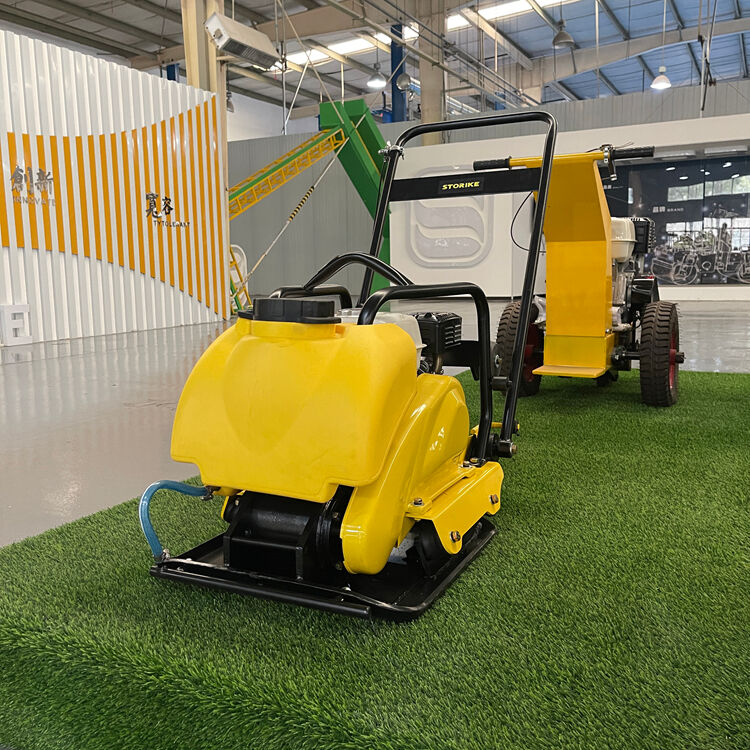
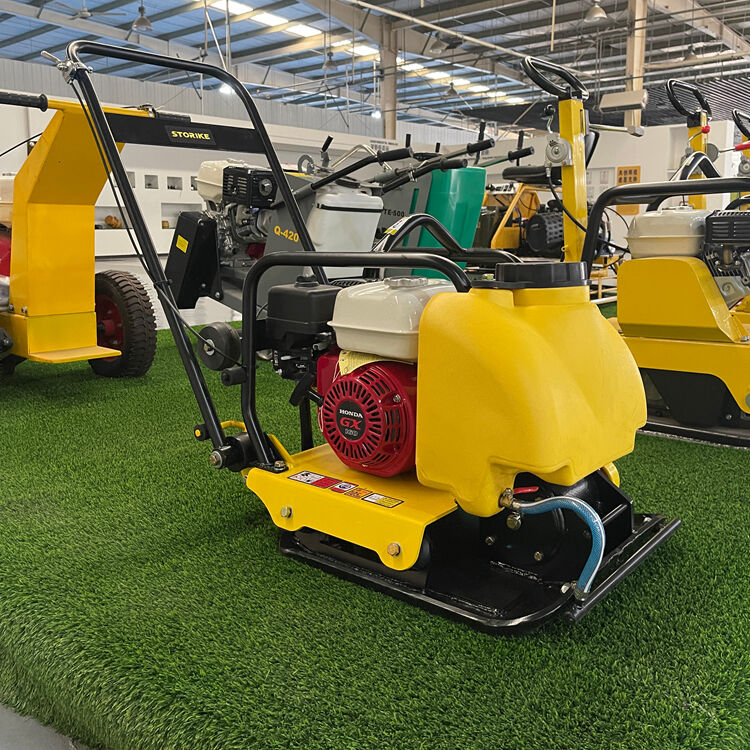
A plate compactor equipped with a large integrated water tank addresses a critical challenge in soil and asphalt compaction: dust suppression and material lubrication. During the compaction process, especially with granular soils like sands or gravels, significant amounts of dust can be generated, creating hazardous working conditions, damaging the compactor's engine air filter, and causing environmental pollution. Furthermore, for optimal compaction of certain cohesive soils, a specific moisture content is required to allow particles to slide past each other and achieve maximum density. The large water tank system provides a continuous, controlled flow of water to the base plate through a series of nozzles or a sprinkler bar. This feature is particularly vital when compacting hot mix asphalt (HMA). Asphalt must be compacted while it is within a specific temperature range to achieve the desired density. Water is applied to the plate to prevent the hot asphalt from sticking to it, which would otherwise tear the mat and result in an uneven, poor-quality surface. The advantage of a large-capacity tank is the ability to work for extended periods without interruption for refills, thereby increasing productivity on larger job sites. This is crucial for projects such as parking lot construction or road widening where stopping to refill a small tank frequently would delay the entire operation and risk the asphalt cooling below the optimal compaction temperature. The tank is typically made from corrosion-resistant materials and features an easy-fill opening. For detailed specifications on our plate compactors with large-capacity water tanks and to find a model that matches your project's demands, please contact our support team for comprehensive information.
Copyright © by 2025 Shandong Storike Engineering Machinery Co., Ltd.